MULTI-PROPERTY OPERATIONS PRICING & DISCOUNTS

Run one pricing engine across every storefront. Override where it matters.

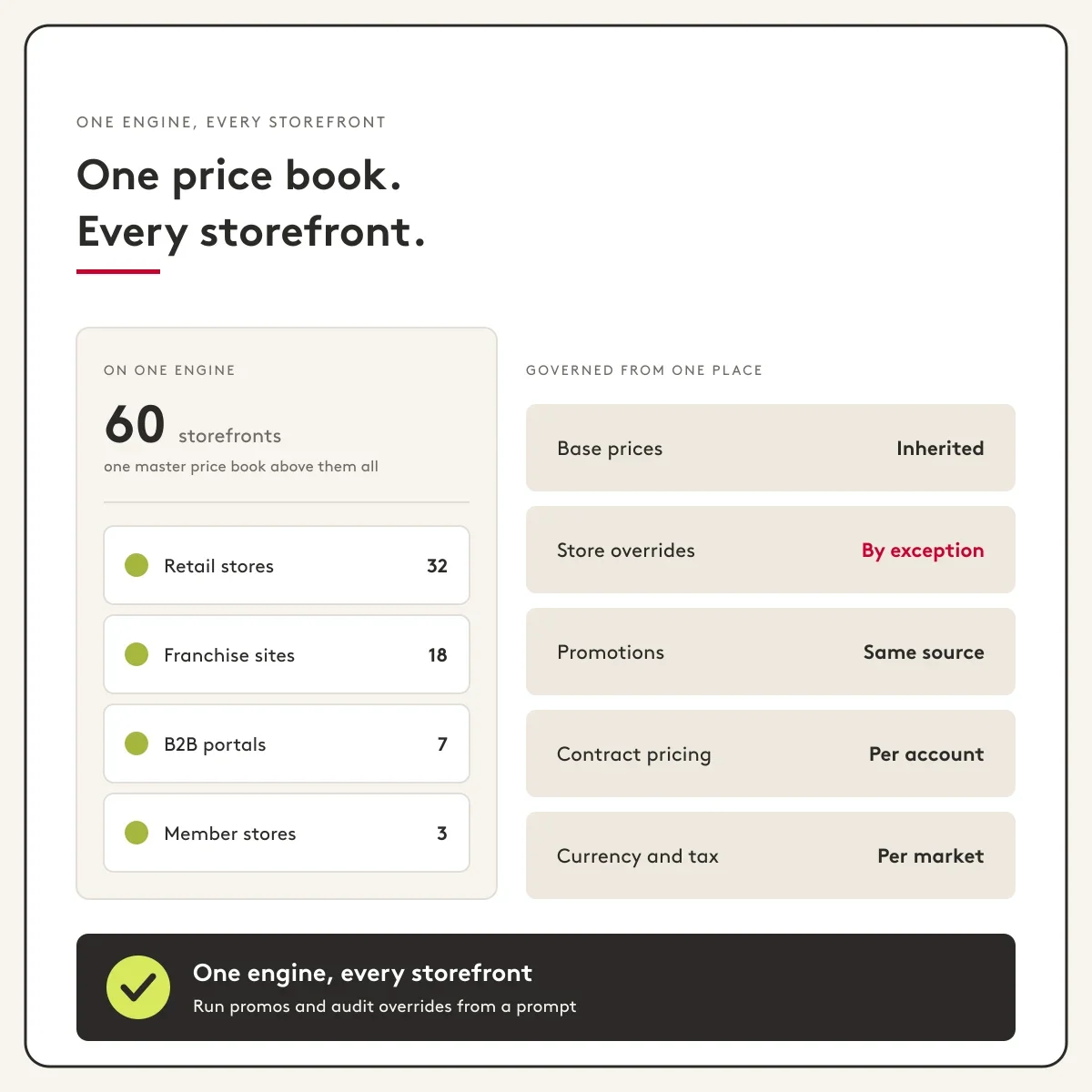
One master price book sits above your storefronts. Stores, brands, regions, and customer groups inherit by default and override where the business needs them to.

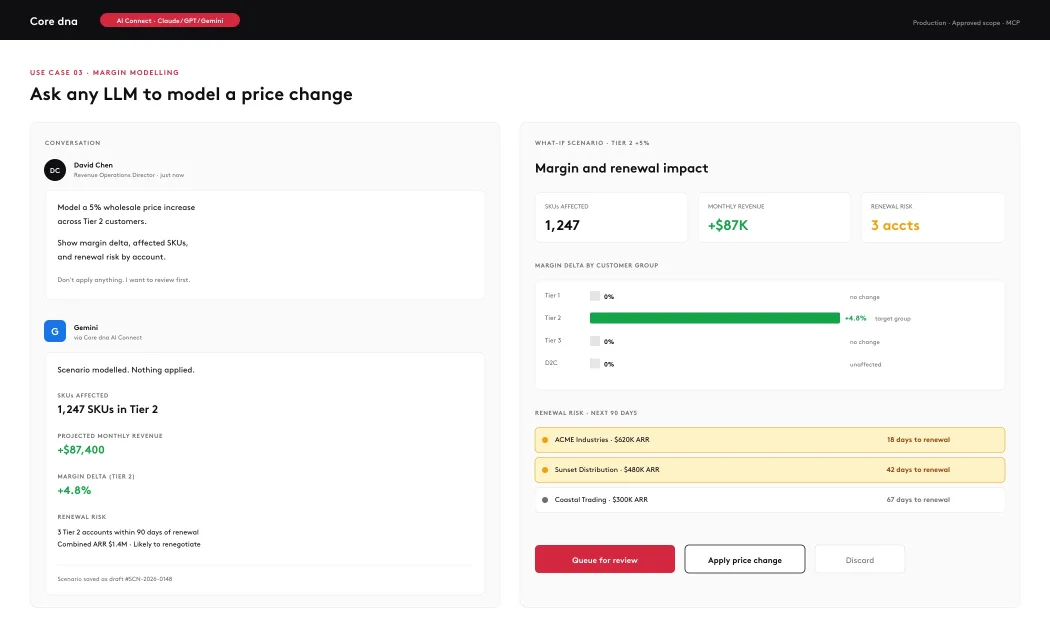
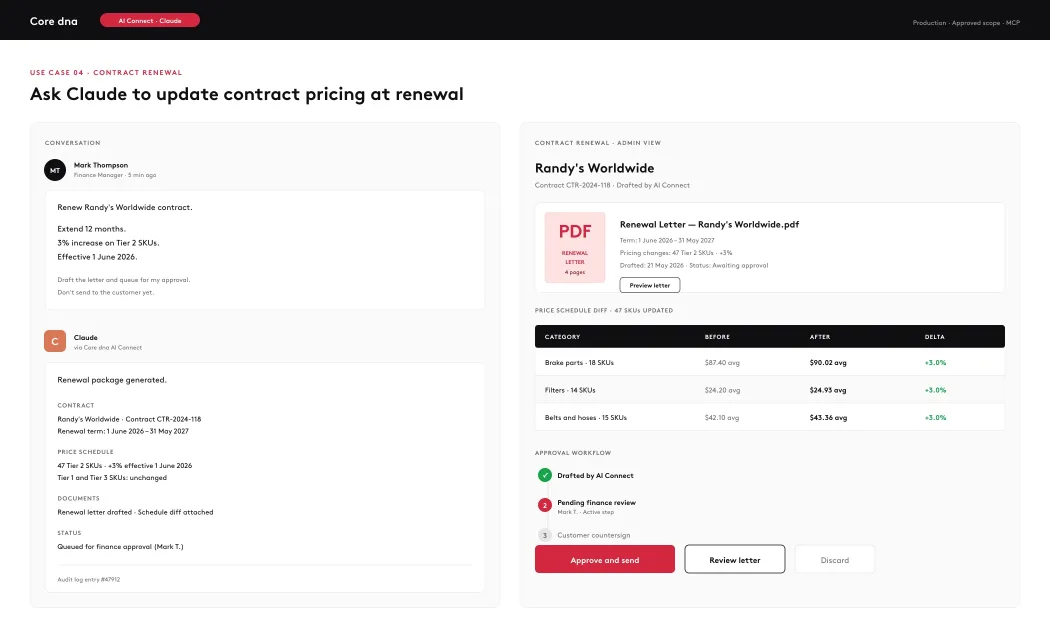
Connect Core dna to Claude, ChatGPT, or any LLM you use. Run promos, adjust margins, and audit overrides from a prompt.

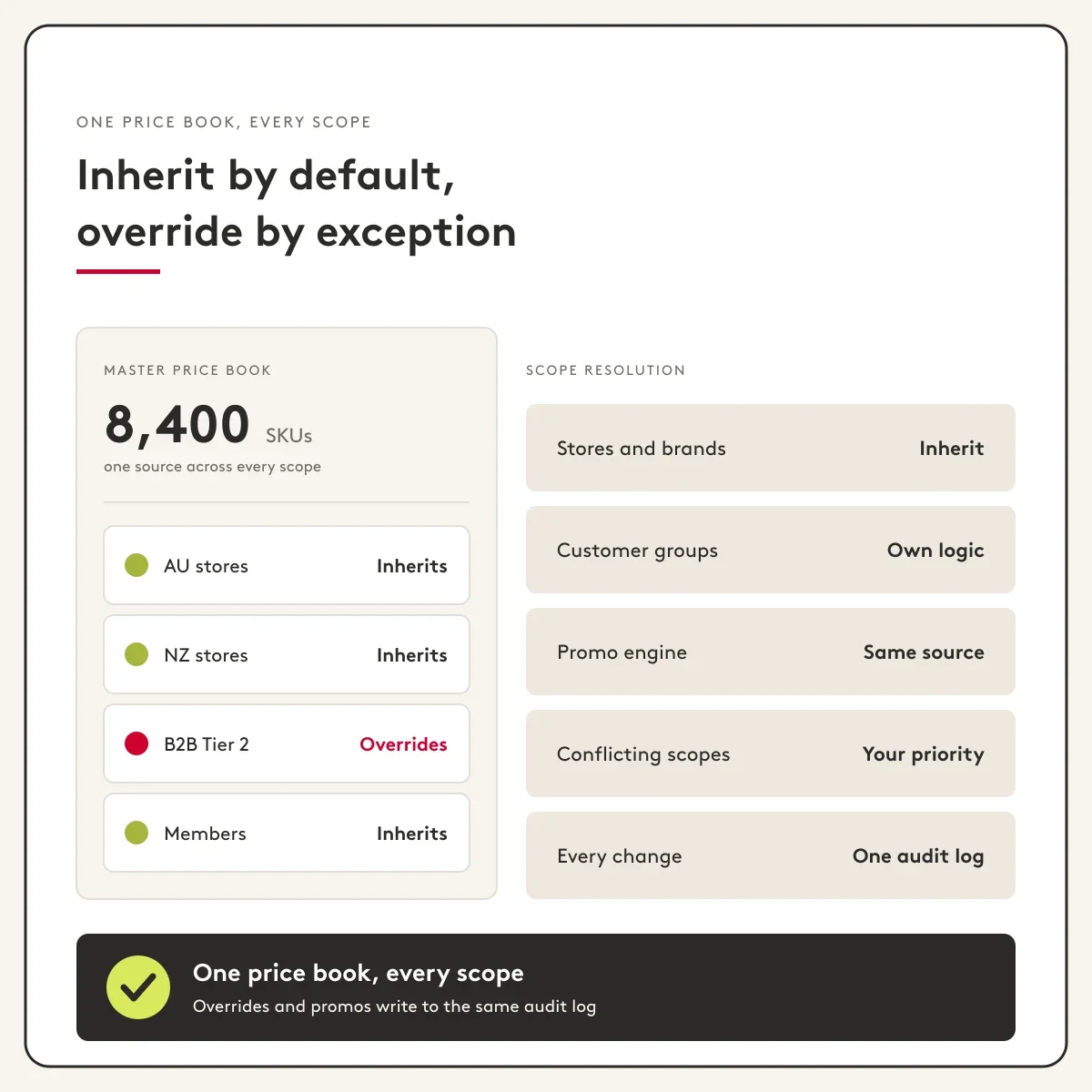
Infographic showing one price book for 60 storefronts with retail, franchise, B2B, and member stores.
60+
Clark Rubber
franchises on one master price book

Built for teams running pricing across
stores, brands, customer groups, and contracts

G2 Enterprise
DXP for multi-property operators
★★★★★
4.5
Multi-property pricing, on one engine

What that actually means

01 Price sprawl

One master price book. Every storefront.

Base prices, tax behavior, and currency live in one engine. Storefronts inherit by default. No second copy of the price book in the ERP, the B2B portal, or a sales spreadsheet to drift out of sync.

02 Scoped overrides

Overrides where the business needs them.

Override by store, brand, region, channel, customer group, or contract. Each override is scoped, audited, and reversible.

03 Customer-group native

B2B tiers, dealer pricing, and member rates without a second engine.

Customer groups carry their own price logic. Contract pricing attaches to the account, not the storefront.

04 Promo composition

One promo engine composes against shared rules.

Promotions stack against catalog, customer groups, and channels. Stacking rules and exclusions live in one place.

Chart explaining inherit and override rules for price book and scope resolution.

One pricing engine.
Every storefront. Every customer group.

Core dna runs one master price book above every storefront, brand, and region. No second copy of the price book lives in the ERP, the portal, or a spreadsheet to drift out of sync. Inheritance rules are operator-defined. When two parent scopes apply to the same SKU, Core dna follows the priority order you set, not an automatic lower-price default.

  • Stores inherit by default and override only where the business needs them to.
  • Customer groups carry their own price logic against the same price book. B2B tiers and member rates don't require a second engine.
  • The promo engine reads from the same source. Discounts compose against shared rules instead of forking the data model.
  • Every override and every promo writes to one audit log.

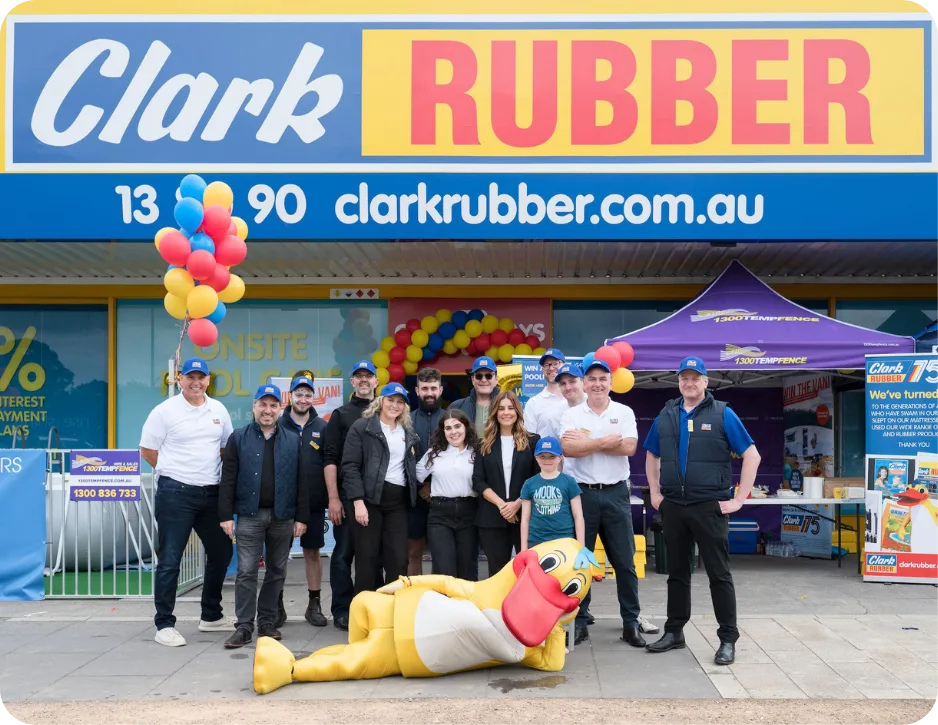
Clark Rubber runs 60+ franchise stores on one master price book

Corporate sets the national price book once. Each store inherits, then overrides where local cost, competition, or season requires it. Finance audits every override against corporate margin policy in one log.

60+ franchise stores · 1 master price book · 0 spreadsheets.

  • Local overrides without losing margin visibility at corporate.
  • National promos and per-store discounts running on one engine.
  • Every override audited back to corporate margin policy.
Group of people at Clark Rubber store opening event with balloons and signage.

Run pricing and promos from a prompt

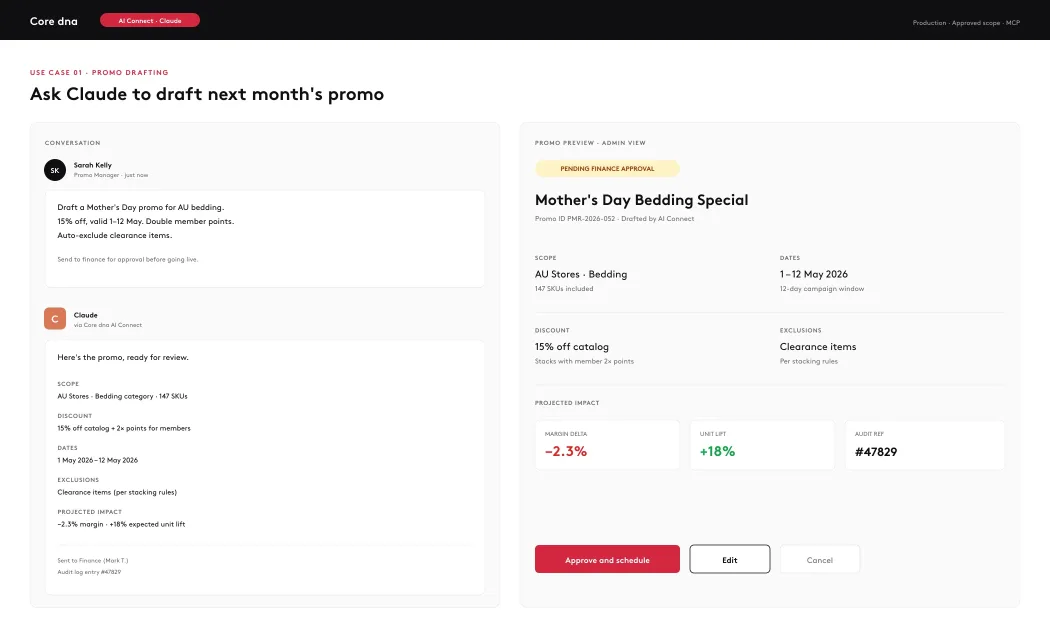
Ask Claude to draft next month's promo
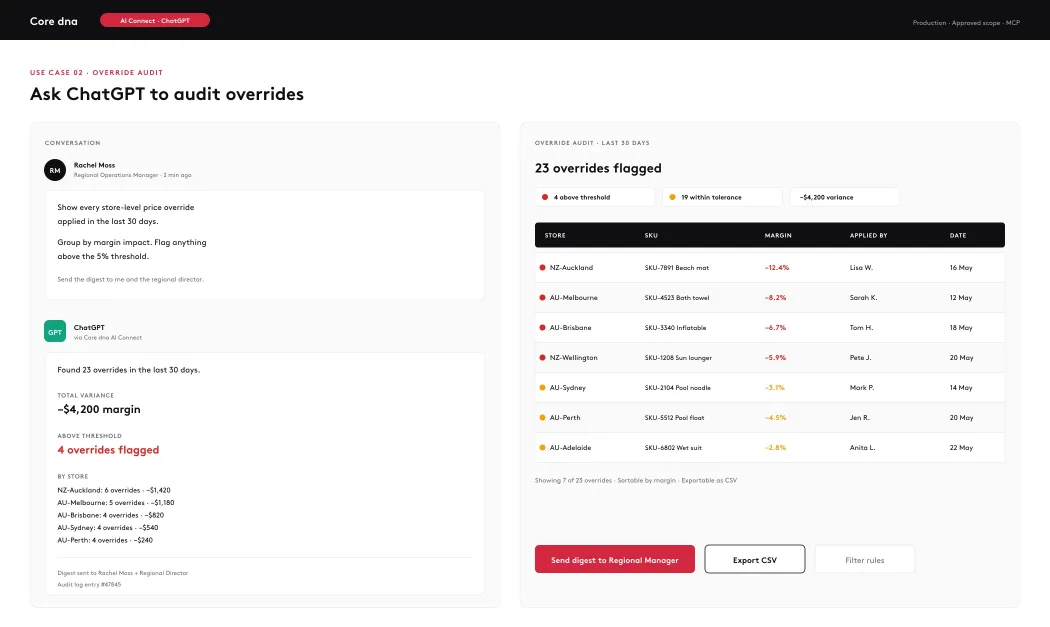
Ask ChatGPT to audit overrides
Ask any LLM to model a price change
Ask Claude to update contract pricing at renewal
Guardrails for pricing changes The commercial team works in prompts. The price book stays in governance.
Approval gates
No price or promo goes live until the assigned approver signs off.
Audit log
Every change captured with prompt, user, timestamp, previous state, and new state.
Permissions
Roles control who can see margin, who can change price, who can approve a discount.
Rollback
Every override reversible to the previous state in one action.

Everything you need to run pricing at scale

Built for pricing complexity across stores, brands, customer groups, and contracts.

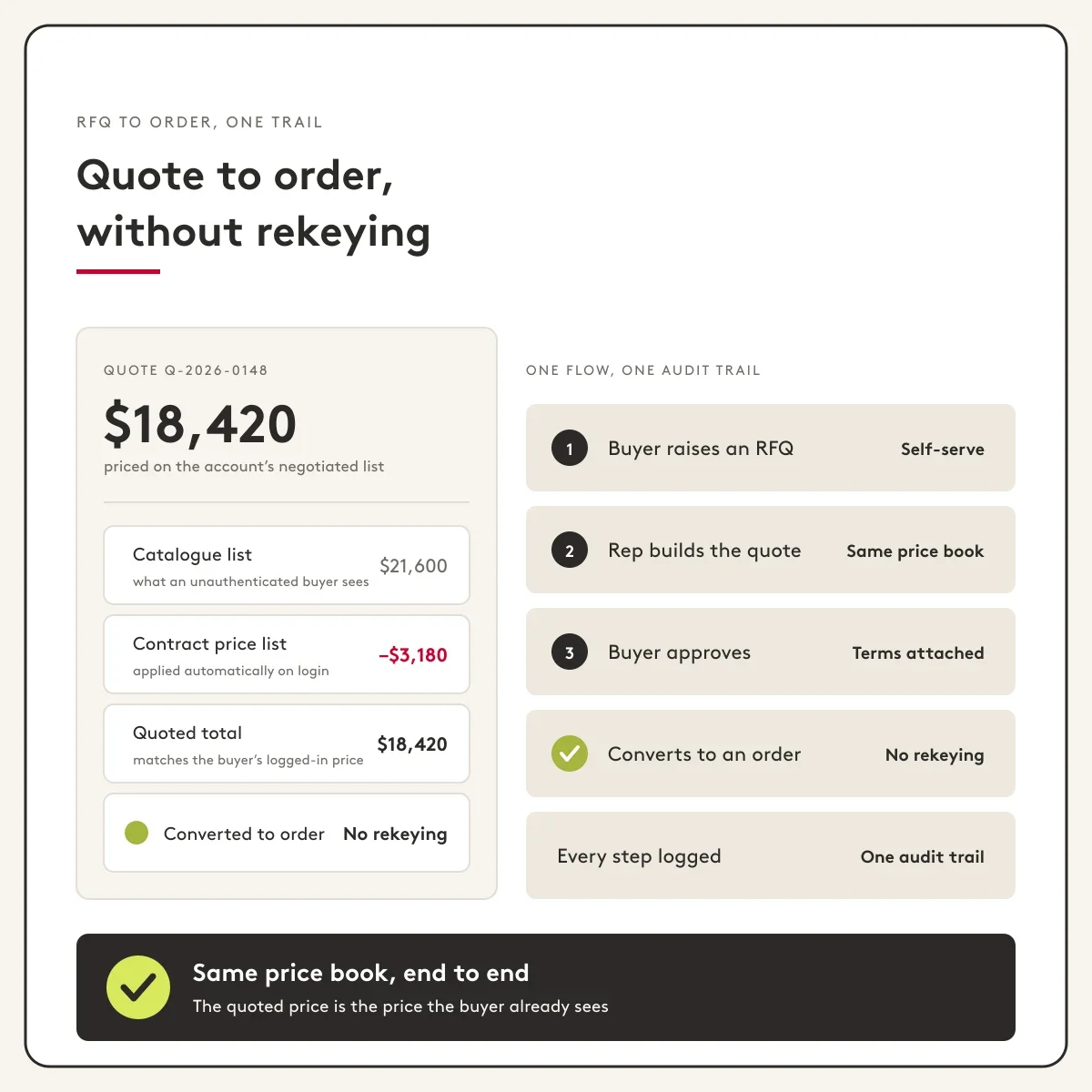
Flowchart showing quote to order process without rekeying, including pricing details.

Quote to order, on the same price book

Buyers raise an RFQ straight from the catalogue. A rep builds or adjusts the quote against the account's negotiated price list, so the quoted price matches what the buyer sees when they log in. An approved quote converts to an order without rekeying.

  • Buyers self-serve a quote request from the catalogue they already browse.
  • Reps build against the account's price list and contract terms, not a separate quoting tool.
  • Approved quotes convert straight to an order, logged on the same audit trail as every other price change.
Built for your pricing model

Different operators need different things. Here is how Core dna ships pricing for the four most common shapes.

FRANCHISE NETWORKS MASTER PRICE BOOK · PER-STORE OVERRIDES

Corporate sets the price. Stores override where they need to.

Master price book at corporate. Each store inherits, then overrides where local cost or demand requires it. Every override auditable back to corporate margin policy.

Master price book Per-store overrides National promos Margin governance
B2B & DISTRIBUTION CUSTOMER GROUPS · CONTRACT PRICING

Customer-group tiers and contract pricing on one engine.

Customer groups, dealer tiers, and contract pricing live in the same engine as your D2C catalog. Sales reps see the same price the buyer sees. Contract schedules sync bidirectionally with the ERP. Buyers self-serve a quote, reps adjust it against contract terms, and an approved quote becomes an order without rekeying.

Customer groups Contract pricing Quote to order Volume tiers Channel parity
MULTI-BRAND RETAIL PER-BRAND LOGIC · CROSS-BRAND PROMOS

Each brand carries its own pricing logic.

Per-brand pricing logic. Cross-brand promotions compose without duplicating data. One audit log across the portfolio.

Per-brand pricing Cross-brand promos Portfolio audit Brand governance
MEMBERSHIP ORGANISATIONS MEMBER TIERS · RENEWAL DISCOUNTS

Member rates next to non-member rates on one price book.

Member tiers, renewal discounts, and non-member rates run against the same price book. One commerce layer for members and non-members.

Member tiers Renewal discounts Non-member rates One commerce layer

Plays well with the stack you already run.

Pricing rules and contract terms flow to and from the systems where your master data already lives.

140+
Certified integrations
ERP & finance 12 apps
NetSuite SAP S/4HANA Microsoft Dynamics Sage +8
PIM & DAM 8 apps
Akeneo Salsify in-platform PIM +5
CRM & sales 14 apps
Salesforce HubSpot Microsoft Dynamics 365 +11
Marketplaces & feeds 18 apps
Amazon eBay Google Shopping B2B marketplaces +14
Core dna isn't for everyone Shopify Plus and BigCommerce remain the right call for a single store on a single model with no customer-group pricing. They are cheaper and faster to ship for that case. Core dna's case starts at the second storefront, the second customer tier, or the second contract price that behaves differently from the first.
You run pricing across more than one storefront
Pricing varies across stores, brands, regions, or channels.
You run B2B alongside D2C
Customer groups, contract pricing, or member tiers run alongside your retail catalog.
You need a finance-grade audit trail
Every override and every promo writes to one log finance can stand behind.
Pricing & Discounts Comparison

Core dna vs the alternatives.

Most operators discover that pricing on Shopify Plus and BigCommerce lives per-storefront by design. Core dna keeps it above the storefronts so overrides scope cleanly.

Capability
Core dna
One master price book · Above every storefront and customer group
Shopify Plus
Per-store pricing · Markets for per-region · B2B catalog feature
BigCommerce B2B Edition
Per-storefront price lists · Native customer groups
Architecture
Where pricing lives
Native
One master price book above every storefront, brand, and customer group. Overrides scoped per shape. No custom apps required to express B2B wholesale, dealer, or contract pricing logic.
Per-store
Pricing lives per store. Multi-store pricing requires Shopify Markets or duplicate stores.
Per-storefront
Customer-group price lists per storefront. Multi-storefront requires duplicate price logic.
Multi-storefront override
Per shape, audited
Native
Scoped overrides by store, brand, region, channel. Each one auditable.
Markets / duplication
Per-store price logic. Cross-store overrides require Markets or manual sync.
Duplication
Per-storefront price lists. No shared price book above.
B2B customer-group and contract pricing
Fixed prices, not just % off
Native
Attaches to the account, not the storefront. Fixed prices per SKU per group.
B2B feature + apps
Native B2B improving. Contract pricing requires the B2B catalog feature plus apps.
Native
Native B2B Edition. Strong on customer groups, lighter on contract terms.
Quote and RFQ to order
Self-serve quote, rep-built, converts to order
Native
Buyers raise an RFQ; reps build against the account price list; an approved quote converts to an order with no rekeying. One audit trail with every other price change.
Draft orders + apps
Draft orders are native. RFQ capture, negotiation, and quote-to-order conversion need a B2B app.
Native (B2B Edition)
Native sales quotes in B2B Edition: buyer-requested, rep-curated, convert to checkout.
Promo engine
Stacking, exclusions, channels
Native
One engine reading the same source as catalog and orders. Stacking rules in one place.
Per-store
Native promos per store. 25-discount cap on standard plans. Cross-store promos require Markets or apps.
Per-storefront
Native promos per storefront. Cross-storefront stacking requires duplication.
Discount and price-rule capacity
Platform-imposed caps
No platform-imposed cap
No platform cap on active discounts, price lists, or customer groups.
25-discount cap
25-discount cap. 3-catalog cap on non-Plus plans. Plus required for higher tiers.
Per-storefront limits
Per-storefront price list limits.
Audit log across pricing changes
Finance-grade reconciliation
Native
One log across overrides, promos, contract changes.
Per-store
Per-store activity logs. Cross-store reconciliation is manual.
Per-storefront
Per-storefront logs. Cross-storefront reconciliation is manual.
AI Connect / agentic pricing
Prompt to production
Native
Core dna AI Connect. Prompt-driven promo, override, and audit work behind production guardrails.
Sidekick in-admin
Sidekick assists in-admin. Not a multi-LLM agentic surface.
Limited
Native AI is product-side. Pricing agents not a first-class surface.
Best fit
Multi-property pricing complexity Single-store D2C Single-storefront B2B
Architecture
Where pricing lives
Core dnaNative
One master price book above every storefront, brand, and customer group. Overrides scoped per shape. No custom apps required to express B2B wholesale, dealer, or contract pricing logic.
Shopify PlusPer-store
Pricing lives per store. Multi-store pricing requires Shopify Markets or duplicate stores.
BigCommerce B2B EditionPer-storefront
Customer-group price lists per storefront. Multi-storefront requires duplicate price logic.
Multi-storefront override
Per shape, audited
Core dnaNative
Scoped overrides by store, brand, region, channel. Each one auditable.
Shopify PlusMarkets / duplication
Per-store price logic. Cross-store overrides require Markets or manual sync.
BigCommerce B2B EditionDuplication
Per-storefront price lists. No shared price book above.
B2B customer-group and contract pricing
Fixed prices, not just % off
Core dnaNative
Attaches to the account, not the storefront. Fixed prices per SKU per group.
Shopify PlusB2B feature + apps
Native B2B improving. Contract pricing requires the B2B catalog feature plus apps.
BigCommerce B2B EditionNative
Native B2B Edition. Strong on customer groups, lighter on contract terms.
Quote and RFQ to order
Self-serve quote, rep-built, converts to order
Core dnaNative
Buyers raise an RFQ; reps build against the account price list; an approved quote converts to an order with no rekeying. One audit trail with every other price change.
Shopify PlusDraft orders + apps
Draft orders are native. RFQ capture, negotiation, and quote-to-order conversion need a B2B app.
BigCommerce B2B EditionNative (B2B Edition)
Native sales quotes in B2B Edition: buyer-requested, rep-curated, convert to checkout.
Promo engine
Stacking, exclusions, channels
Core dnaNative
One engine reading the same source as catalog and orders. Stacking rules in one place.
Shopify PlusPer-store
Native promos per store. 25-discount cap on standard plans. Cross-store promos require Markets or apps.
BigCommerce B2B EditionPer-storefront
Native promos per storefront. Cross-storefront stacking requires duplication.
Discount and price-rule capacity
Platform-imposed caps
Core dnaNo platform-imposed cap
No platform cap on active discounts, price lists, or customer groups.
Shopify Plus25-discount cap
25-discount cap. 3-catalog cap on non-Plus plans. Plus required for higher tiers.
BigCommerce B2B EditionPer-storefront limits
Per-storefront price list limits.
Audit log across pricing changes
Finance-grade reconciliation
Core dnaNative
One log across overrides, promos, contract changes.
Shopify PlusPer-store
Per-store activity logs. Cross-store reconciliation is manual.
BigCommerce B2B EditionPer-storefront
Per-storefront logs. Cross-storefront reconciliation is manual.
AI Connect / agentic pricing
Prompt to production
Core dnaNative
Core dna AI Connect. Prompt-driven promo, override, and audit work behind production guardrails.
Shopify PlusSidekick in-admin
Sidekick assists in-admin. Not a multi-LLM agentic surface.
BigCommerce B2B EditionLimited
Native AI is product-side. Pricing agents not a first-class surface.
Best fit
Core dnaMulti-property pricing complexity
Shopify PlusSingle-store D2C
BigCommerce B2B EditionSingle-storefront B2B

Yes, through Core dna MCP. Describe the change in plain language and the platform makes it against the same rules your team uses in the admin, with approval, audit, and rollback built in. Draft a promo, model a margin scenario before it goes live, audit recent overrides, or update contract pricing at renewal, all from a prompt. It runs on a live MCP server with 80+ tools and 400+ APIs. No price or promo goes live until the assigned approver signs off.

Read the full answer →

Both automatic discounts that apply at the cart without a code, and code-based vouchers and promo codes. Buy-one-get-one, volume breaks, customer-group rates, regional flash sales, and renewal discounts run natively. Stacking and exclusion rules live in one place, so you control which discounts combine and which cannot. There is no platform-imposed cap on the number of active discounts, price lists, or customer groups.


Read the full answer →

Yes. One storefront can serve retail customers at list price, B2B accounts on contract pricing, members on member rates, and internal users on a no-payment flow, all at once. The price each visitor sees is resolved from the customer group and account they belong to, against one master price book. You are not running separate stores or separate engines to support different commercial models under one brand.

Read the full answer →

Yes. Buyers can raise an RFQ from the catalogue, and sales reps can build or adjust a quote against the account's negotiated price list. The quote carries the same pricing rules, customer-group logic, and contract terms the account already sits on, so the quoted price matches what the buyer sees when they log in. Approved quotes convert to an order without rekeying. Every override on a quote is logged against the account.

Read the full answer →

Yes. Not every order has to collect payment. Core dna can run a checkout that behaves like an order, moves stock, and triggers fulfilment and approval, but takes no payment. Internal transfers, branch requisitions, sample orders, and account-billed orders run on the same engine as paid orders, with the same audit trail. You decide per customer group or per channel whether payment is collected, deferred to invoice, or skipped entirely.

Read the full answer →

One pricing engine. Every storefront. Every customer group.

See the price book, overrides, and AI Connect promo workflow in a 90-second walk-through. Or book a 30-minute scoping call and we'll model your pricing structure against the engine.