Time to next brand live
How quickly a new brand can join the portfolio
One Shopify Plus org per brandNew setup every time
Each brand means a new org, new integration project, new app stack, and another vendor relationship to manage.
Custom multi-brand build9 to 18 months
Each brand becomes another engineering project with discovery, architecture, build, testing, and launch dependencies.
Core dnaTenant configured
Tenant configured in hours to days. Discovery and integration typically takes 4 to 6 weeks. Pilot brand live in 12 to 18 weeks from discovery kick-off.
Cost shape
How costs grow across the brand portfolio
One Shopify Plus org per brandLinear growth
Every brand multiplies subscription, app, integration, reporting, maintenance, and partner management costs.
Custom multi-brand buildLarge capex
Large upfront build cost, followed by ongoing development, infrastructure, QA, security, and support commitments.
Core dnaShared platform model
One platform subscription, a configuration project, and managed services support the full portfolio operating model.
Customer across brands
How customer data, loyalty, returns, and LTV work
One Shopify Plus org per brandSplit records
One customer becomes separate records across brands. Loyalty, returns, service history, and LTV break at the brand boundary.
Custom multi-brand buildBuilt if prioritized
Cross-brand customer visibility depends on what the engineering team had time, budget, and data structure to build.
Core dnaOne customer graph
One customer record can be scoped per brand, with loyalty configured at the brand or portfolio level.
Adding a brand
What happens when the portfolio grows
One Shopify Plus org per brandBuy and integrate again
Buy another Shopify Plus contract, rebuild the setup, reconnect systems, and recreate reporting for the new brand.
Custom multi-brand buildEngineering project
Every new brand needs technical planning, code changes, integration work, testing, and deployment support.
Core dnaConfigure a tenant
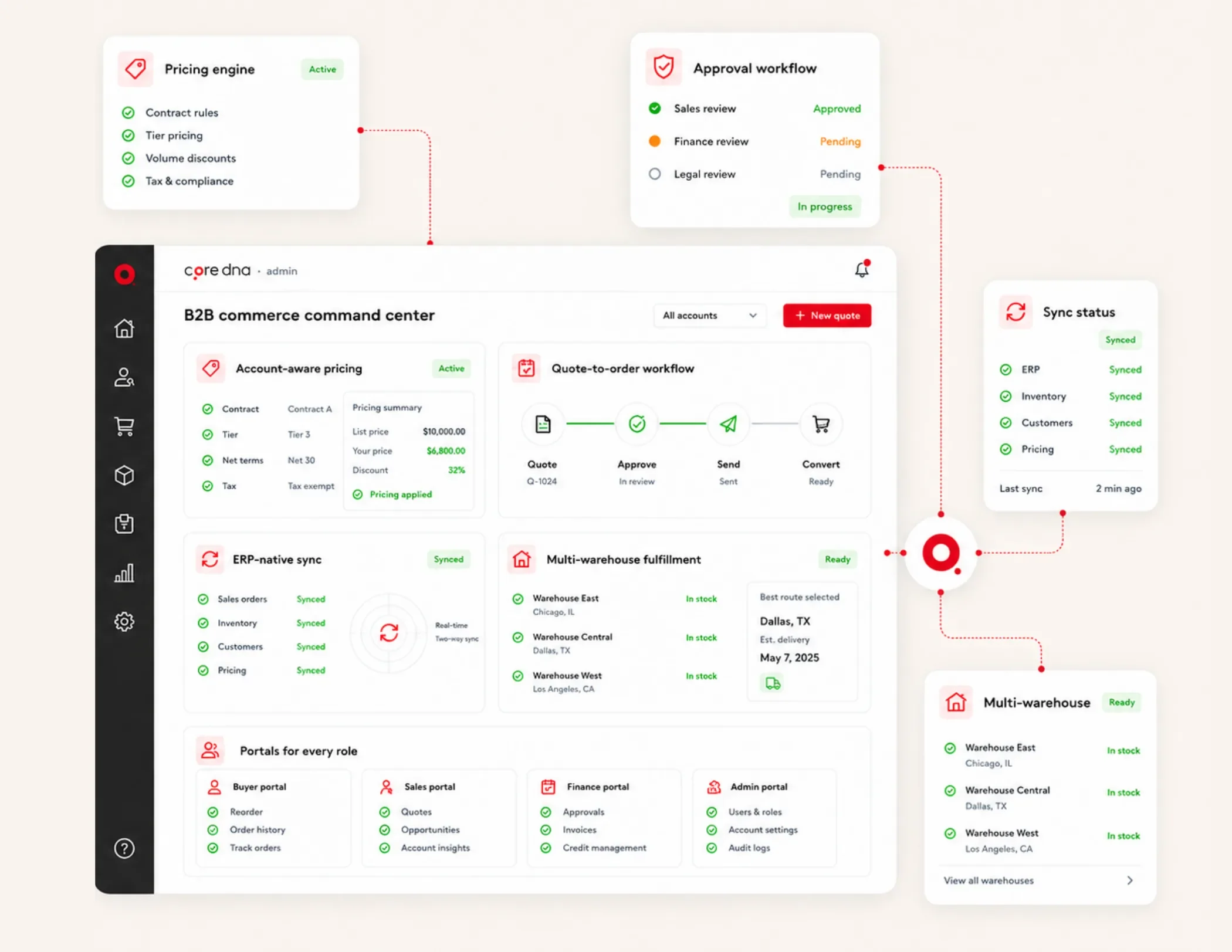
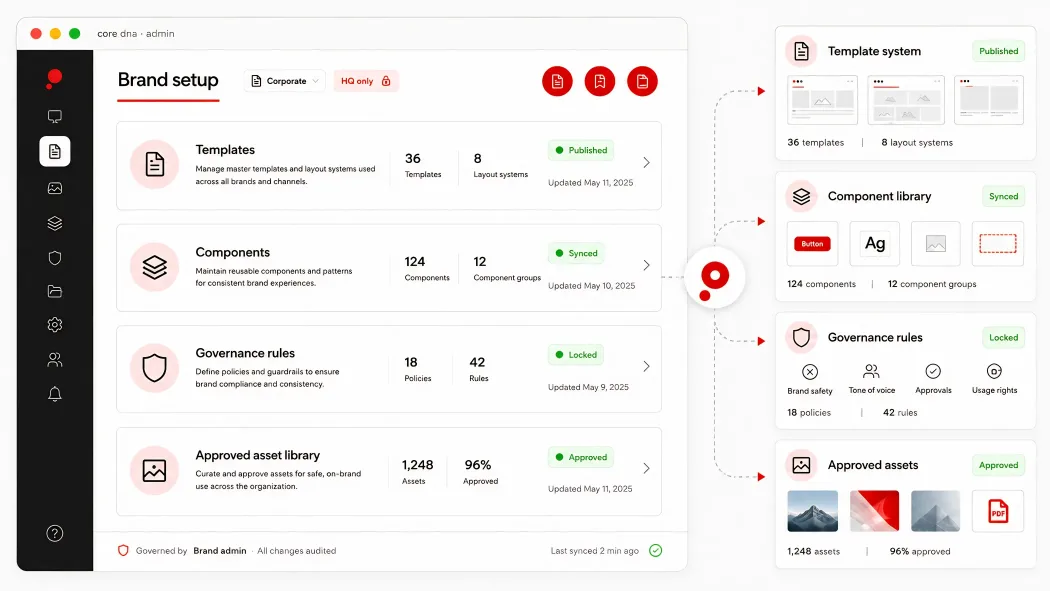
Add the brand as a tenant in admin, then configure storefront rules, catalog scope, pricing, permissions, and integrations.
Catalog and pricing control
How shared products and brand-specific rules work
One Shopify Plus org per brandDuplicated by brand
Product data, pricing rules, merchandising logic, and availability often need to be copied or synced across orgs.
Custom multi-brand buildCustom data model
Shared catalog logic is possible, but the team has to design and maintain the product, price, and brand hierarchy.
Core dnaShared core, brand scope
Use shared product records where it makes sense, then scope copy, imagery, pricing, availability, and merchandising by brand.
Brand independence
How each brand keeps its own experience
One Shopify Plus org per brandStrong isolation
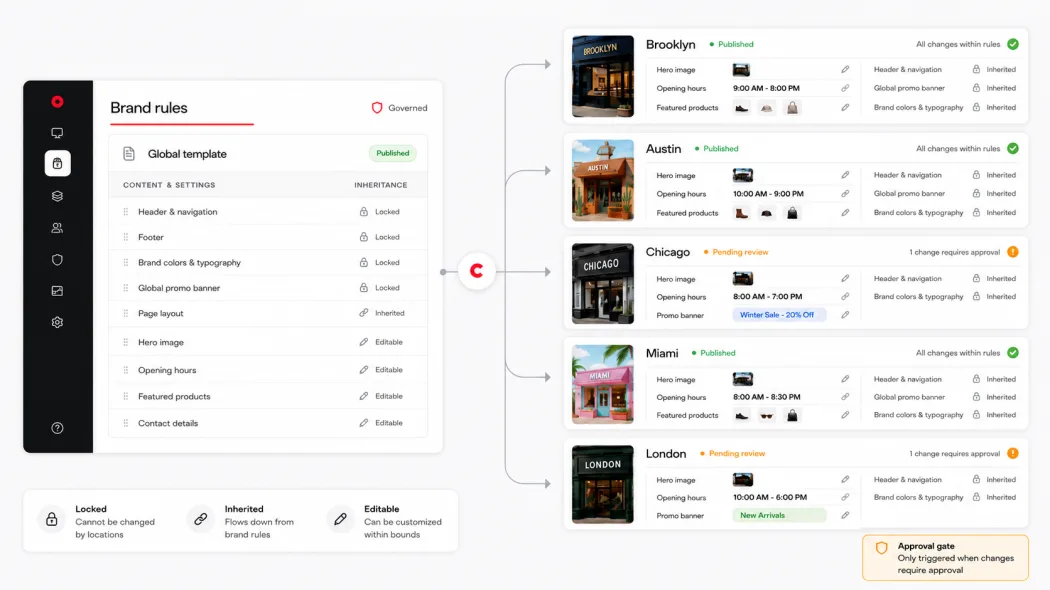
Each brand can have its own storefront, theme, apps, and operating model, but shared operations become harder.
Custom multi-brand buildAs designed
Brand independence depends on how well the architecture separates storefront experience from shared operations.
Core dnaIndependent storefronts
Each brand keeps its own domain, identity, storefront, catalog expression, pricing model, and customer experience.
Shared operations
How the portfolio team manages work behind the scenes
One Shopify Plus org per brandMiddleware required
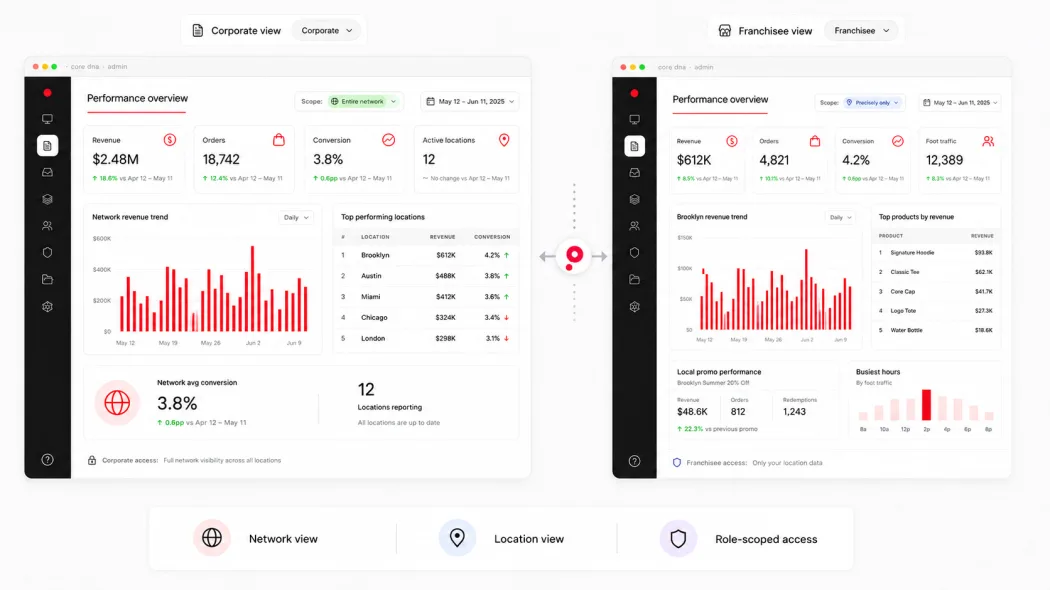
Cross-brand reporting, inventory, customer data, promotions, and workflow coordination usually need external middleware.
Custom multi-brand buildCustom workflows
Shared operations can be designed, but every permission rule, workflow, and integration needs technical ownership.
Core dnaPortfolio command layer
Portfolio teams can manage content, commerce, workflows, reporting, and integrations across brands from one platform.
Where it breaks
The failure point as brand complexity increases
One Shopify Plus org per brandIndependent org sprawl
Each org grows independently. Cross-brand operations become difficult without middleware, manual processes, or duplicate work.
Custom multi-brand buildMaintenance debt
Maintenance debt compounds as brands, features, integrations, and edge cases grow. Risk increases when the original team leaves.
Core dnaCapability accumulates
Configuration becomes reusable platform capability across brands instead of isolated project work for every new storefront.
Best choice when
One Shopify Plus org per brandBrands operate separately
Each brand runs mostly on its own, with limited need for shared customers, shared operations, or portfolio-level reporting.
Custom multi-brand buildYou want bespoke control
You have the engineering budget, timeline, and internal team to own a custom multi-brand platform long term.
Core dnaPortfolio
You need every brand to keep its own identity while your team runs shared commerce, content, customer, and workflow operations from one place.