
Sitecore vs Core dna
Why are so many customers leaving Sitecore for Core dna? The short answer? More freedom to innovate, zero pressure to "upgrade", no agency dependence, and a lower bill to sweeten the deal.
Want to migrate from Sitecore? Switch to Core dna and get support with your migration .
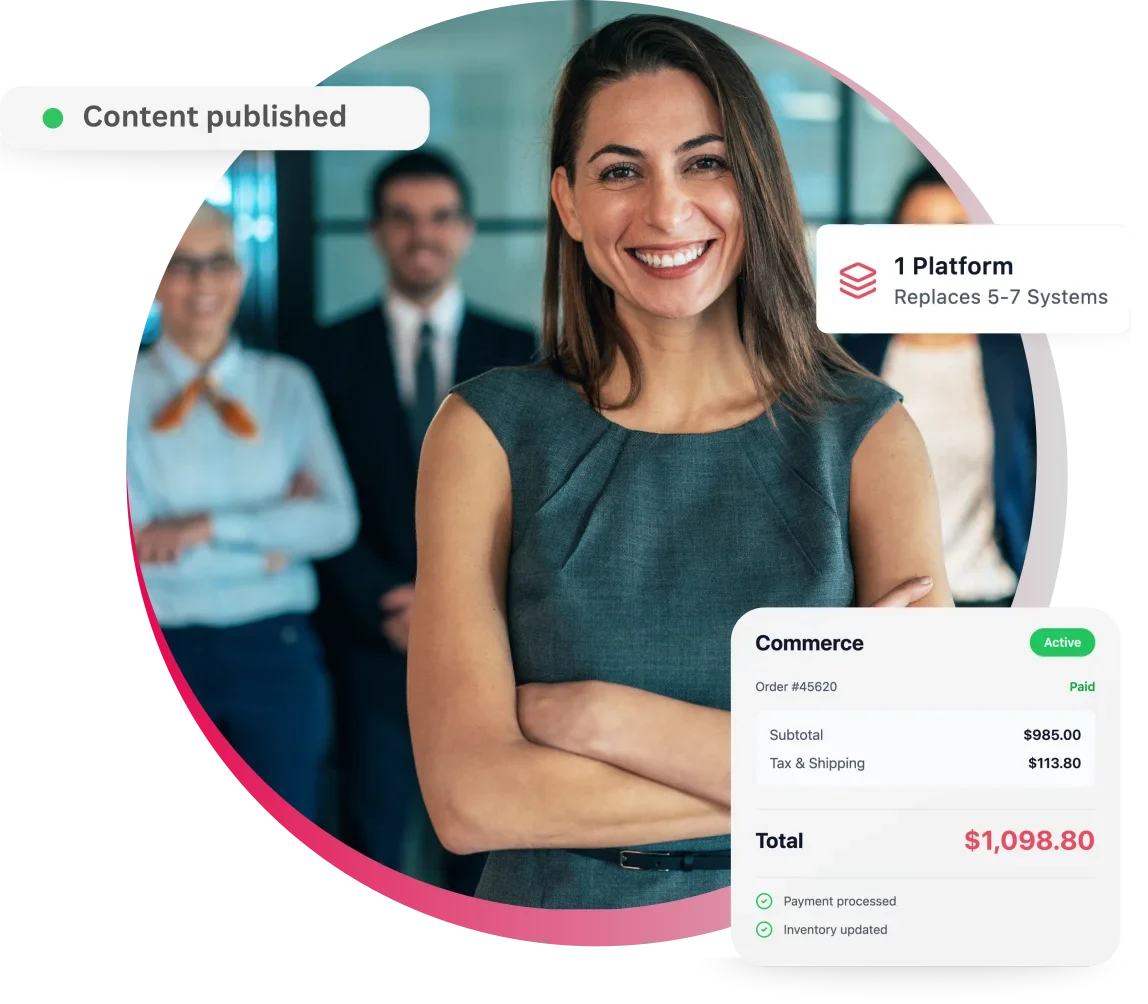
The great Sitecore exodus
You're experiencing that combination of a bloated stack, endless dev backlogs, painful upgrades, and fragmented innovation. No you're not imagining it. Sitecore is big and complex, with pricing higher than that of comparable platforms.
Marketing teams can't modify sites without third-party Sitecore specialists, which turns simple changes into significant costs. The question isn't whether to leave, but when.
| Capability / Reality | Core dna | Sitecore |
|---|---|---|
| Unified CMS + Commerce | ✓ Native and fully integrated | Partial (separate products, licenses, and implementations) |
| Single platform, not acquisition | ✓ Built as one system | ✕ Assembled via acquisitions (XMS, CDP, Personalize, Commerce) |
| Predictable total cost of ownership | ✓ Fewer licenses and vendors | ✕ High and escalating TCO |
| Built-in delivery & support team | ✓ Platform + people | ✕ Relies heavily on external SIs |
| Marketing team autonomy | ✓ Marketers modify sites without developer tickets | ✕ Marketing teams can’t modify websites without third-party help |
| Low-code for business teams | ✓ Designed for content ops | ✕ Developer-centric for most changes |
| Multi-site / franchise at scale | ✓ Native and proven | ✓ Possible but complex and costly |
| Localization without bolt-ons | ✓ Built-in | ✕ Typically requires additional modules |
| Speed to launch | ✓ Weeks | ✕ Months |
| Composable without heavy glue code | ✓ Integrated by design | ✕ Significant orchestration required |
| Clear ownership & accountability | ✓ One vendor, one roadmap | ✕ Diffused across vendors and partners |
| Platform clarity | ✓ One clear platform direction | ✕ Multiple CMS options (XP, XM, SitecoreAI) create confusion for customers |
| Predictable total cost of ownership | ✓ Transparent pricing with fewer licenses | ✕ Pricing higher than comparable platforms, plus add-on costs |
| Commercial pressure to upsell modules | ✕ No | ✓ Yes |
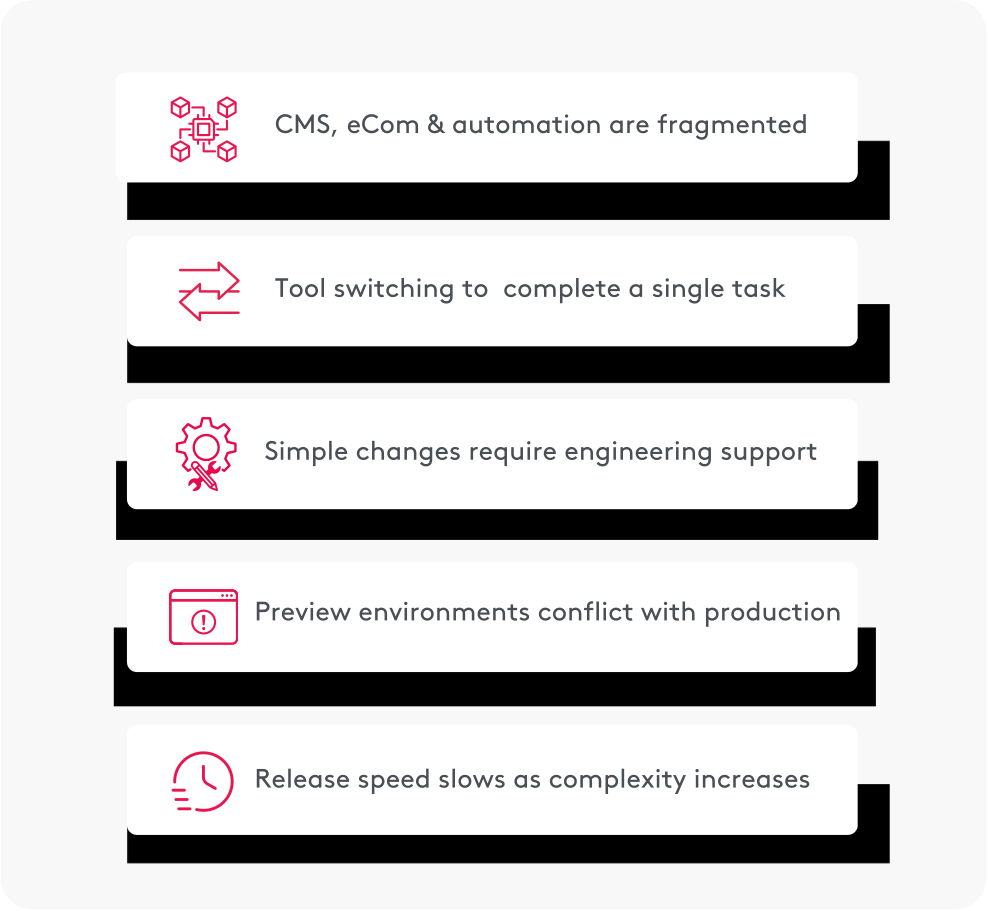
Less bloat, more scalability
Liferay's portal framework is powerful if you're building an enterprise portal in 2005. For modern commerce teams who need to move fast, ship content, and iterate without filing Java developer tickets, that portal architecture creates friction. With Core dna:
- $$$ saved on developer salaries
- Works natively to simplify IT department resources
- One platform replaces 5-7 disconnected systems
- Zero transaction fees, zero plugin costs, and zero surprise bills.
- Versionless, so you never pay to "migrate" or "upgrade" Core

Trusted by enterprises to deliver powerful digital experiences
Companies choosing Core dna over headless-only platforms report faster time-to-market, lower total cost of ownership, and marketing teams that can actually ship without waiting on developers.
- YMCA Toronto: $100k in annual savings + 500% growth in registrations after consolidating 7 systems into Core dna.
- Standard Process: 60% increase in eCommerce without hiring a single developer.
- Clark Rubber: 47 franchises unified under one digital platform, managed by a lean team of 4.
- RANDYS Worldwide: 4x revenue growth in year one with 7 integrated sites and 30,000 SKUs.

We built Core dna just right
Not too complex. Not too limited. Built for how teams actually work today.
Sitecore? Too complex
Enterprise suites like Sitecore cost millions and require armies of consultants. Add-ons strain budgets and reduce ROI. One enterprise described their implementation as “Frankenstein-like,” requiring third-party specialists for simple changes.
Drop-in replacements? Too limited
Platforms like WordPress, Joomla, and Drupal work for simple use cases, but aren’t built for scale. As operations grow, governance, performance, and extensibility break down.
Core dna? Just right
Core dna delivers enterprise power without enterprise drag, dependency, or confusion. One platform. One clear roadmap. Modern architecture built on current standards.
Marketing teams work independently. Developers use modern frameworks. Teams see ROI in months, not years. No third-party specialists required for simple changes.
Secure, Speedy, Seamless
✓ 99.9% uptime SLA
✓ 100% Lighthouse performance scores
✓ Auto-scaling infrastructure
✓ Global CDN and regulatory compliance
✓ No versioning, no disruptive upgrades
✓ Continuous innovation included