
SAP Commerce Cloud promises enterprise-grade capabilities—but does it deliver in today’s fast-paced market? We break down its strengths, weaknesses, and what businesses should really consider. While SAP is best known for being the global leader in enterprise resource planning (ERP) software and business AI. And like any other corporation, it has expanded its offering with Commerce solutions.
SAP Commerce Cloud has become undoubtedly one of the leaders in enterprise e-commerce software.
SAP developed its digital commerce software for multiple channels across B2B, B2C, and B2B2C models.
It offers the security and scalability to large enterprises with augmented needs and requirements.
For existing SAP users, embracing SAP Commerce will come as a logical choice for their eCommerce operations.
The advantages of staying in the same ecosystem are indeed valuable and create a cohesive business structure. Of course, there is always an argument against it too.
SAP Commerce is ideal for larger enterprise. But for medium size businesses, it may hinder growth as they usually need more agility and hands on support.
In this article, we will explore the features and benefits of SAP Commerce Cloud. We will also discuss when it makes sense to use this platform - and when it doesn't.
On this page:
What is SAP Commerce Cloud?
SAP Commerce Cloud is a robust e-commerce platform with advanced capabilities designed for large corporations and enterprises.
Who is SAP Commerce Cloud Ideal For?
- Large Enterprises: If your company's annual revenue is $50M and above with extensive and complex product catalogs across multiple regions and countries.
- Organizations in the SAP Ecosystem: If you are a user of SAP systems like SAP S/4HANA or SAP Finance. SAP Commerce cloud can seamlessly integrate with your operations to create centralized data sharing and seamless automations. This will reduce inefficiencies, enhances decision-making, and simplifies operations.
- Omnichannel Businesses: If you operate across multiple sales channels: websites, mobile apps, and physical stores—SAP headless capabilities will come in useful.
What Makes SAP Commerce Cloud Stand Out?
- Headless Commerce Flexibility: Offer a branded omnichannel experience wherever your customers shop. SAP Commerce can help you create personalized, unified and consistent experience across all and any sales channel.
- Scalability for Growth: SAP Commerce Cloud will handle any large scale operational demands without a blink. Whether it’s high transaction volumes or the addition of new markets and storefronts.
- Advanced Personalization: With advanced AI features and machine learning, the platform offers predictive product recommendations and personalized marketing.
SAP Commerce Cloud is a great choice for large businesses. It offers a scalable, omnichannel platform with strong integration features
Read this next:
eCommerce Trends That Will Dominate 2025
What does SAP Commerce Cloud do?
Here is a quick overview of SAP Commerce Cloud capabilities:
1. Omnichannel commerce
Different companies use varied combinations of go-to-market models, which means reaching customers through multiple and diverse touchpoints.
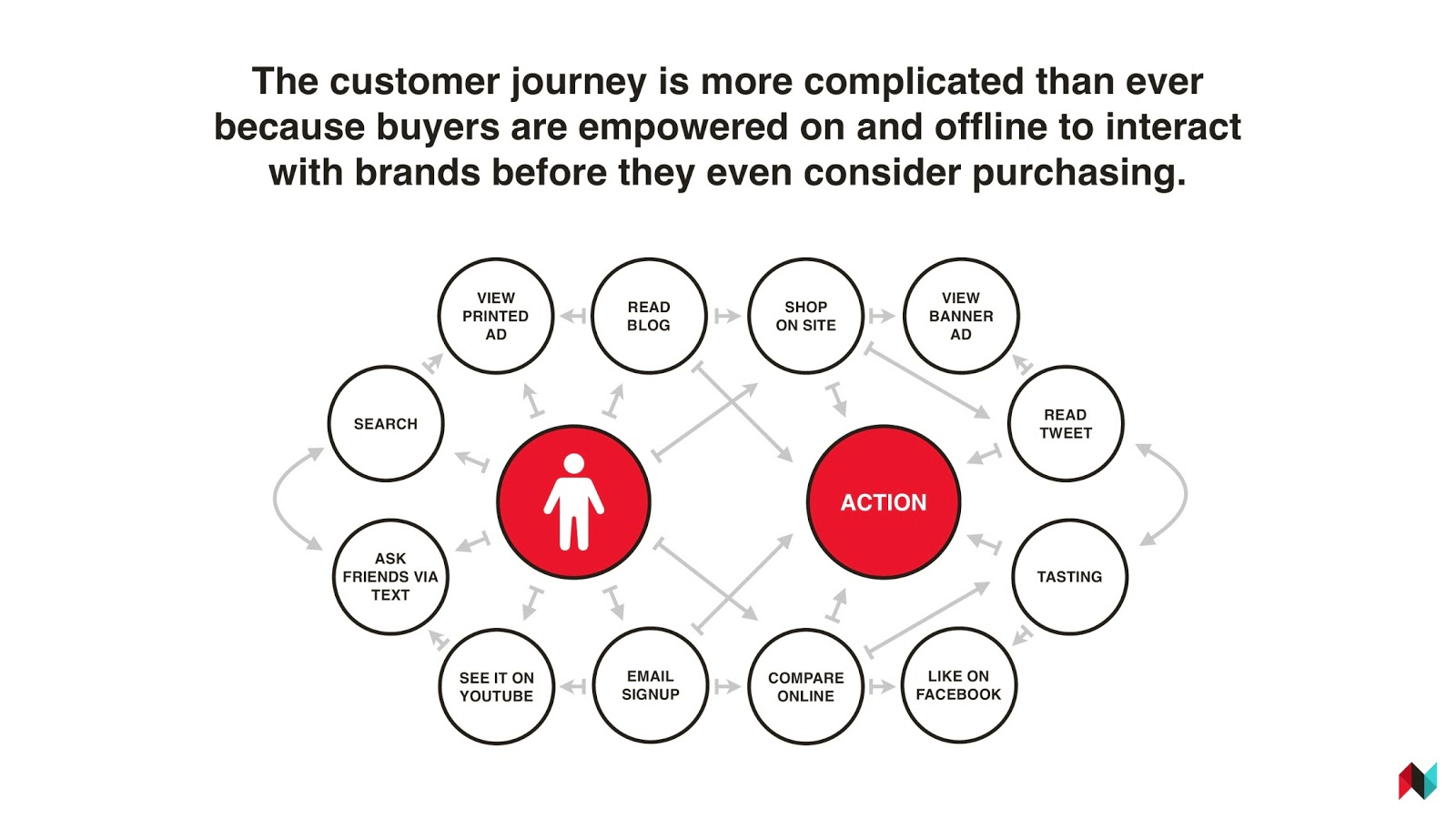
(The complication of the Customer Journey graph)
This can be incredibly hard to manage, creating complexity and data fragmentation for the seller, lack of personalization and reliability for the customer, and can lead to higher costs for both.
Commerce Cloud aims to solve these issues with modules aimed at both B2B and B2C users.
Core B2C capabilities include an omnichannel, responsive storefront that promotes consistency across all devices, with powerful search functionality and tailored promotions and recommendations to increase customer engagement.
The B2B Accelerator module manages complex B2B relationships through intelligent pricing models, price lists, and quote generation.
Also, through self-service options like “Organization Management,” where customers can define order approval workflows, and “Quote Negotiation”, where customers can request quotes to be reviewed by managers. The checkout has B2B-friendly features like PO number entry, auto-replenish, and the ability to charge an account rather than a credit card.
2. Product content management
All the product content management capabilities within Commerce Cloud are housed in one easy-to-use, centralized content repository.
From here, users can effortlessly catalog products by diverse attributes, and bulk-edit, bulk-publish, and bulk-upload multiple products simultaneously, saving time and ensuring consistency.
Users can also:
- Curate bundles (products and services combined into unique, personalized offers)
- Define flexible pricing rules
- Use built-in templates to increase average order value and streamline the buying process
Read this next:
eCommerce Comparison, Shopify vs Core dna
3. Customer experience management
Commerce Cloud comes with a WYSIWYG website editing tool (they call SmartEdit) with a drag-and-drop interface for creating websites, pages, promotions, and banners for mobile, tablet, and desktop.
Users can even use SmartEdit to build on top of old designs on multiple storefronts to maintain a consistent customer view.
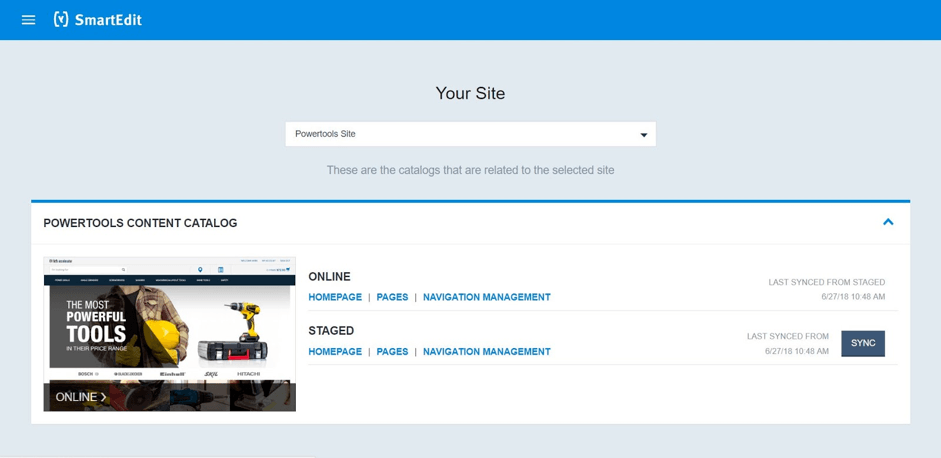
(SAP Commerce Cloud - SmartEdit | Source)
It’s all about personalization at the individual level, using Commerce Cloud’s so-called “Context-Driven Services.” These services measure patterns of customer intent, action, behavior, and affinities, right down to preferences for sizes and colors.
Armed with this data, users can curate deeply personalized shopping experiences for their customers by refining online product displays (merchandising), recommendations, offers, and remarketing at the individual level.
4. Order management
Order management represents a significant challenge for companies operating on multiple channels and from numerous physical locations.
Editor’s note
Here’s how you could easily manage orders and transactions in the Core dna Commerce app.
- Go to Transactions > Commerce.
- The first thing that appears when selecting the Commerce option is the Manage Orders form containing a list of orders.
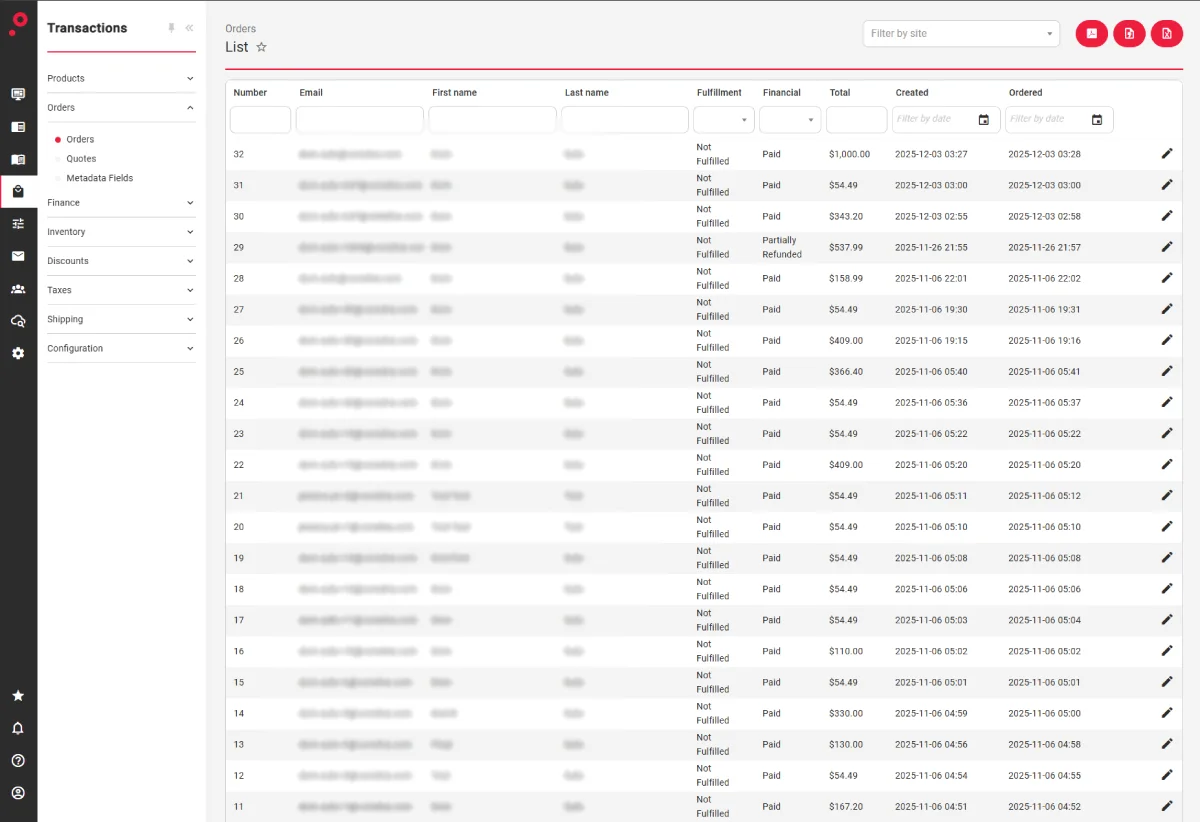
(Core dna’s Order Management tab)
This is where all of the orders that have been placed on the website will appear. They are sorted by order number, with the highest of most recent being at the very top of the page.
Alongside the Order Number heading, there is the Payment which defines the way in which the item was purchased. The Total contains the total price of the product that was purchased, and then there is the Date which notes the exact date the transaction occurred, and the order Status of the purchase.
- You can easily edit the order details by clicking one of the following:
- Details: Will bring up the order details form
- Audit Log: This is where a log of all the audits are listed, alongside an email and date
- Transactions: Will bring up transaction details such as order date, time, value, and order URL
- Delete: Will delete the order from the system
Customers want a seamless experience across all touchpoints and expect medium-sized operations to offer levels of customer service only Amazon can afford. With Commerce Cloud, that’s more-or-less possible.
Commerce Cloud gives users a single view of inventory across an entire organization. This means a single source of truth for the seller and complete omnichannel flexibility for the customer. Customers can buy, collect, and return anywhere without messing up stock levels.
5. Industry-specific features
Commerce Cloud comes with a portfolio of unique, out-of-the-box, industry-specific “Accelerators” designed to meet the challenges, opportunities, and requirements of specific sectors.
Each Industry Accelerator has a ready-to-launch storefront for rapid time-to-value and several bespoke features.
These accelerators include:
The financial services accelerator
- Designed for: Insurance companies, retail banks, and other financial services providers
- Core features: Customers can apply for insurance products, and policyholders can view policy information and file on-screen claims.
The travel accelerator
- Designed for: Travel agents and booking companies
- Core features: Customers can search with advanced filters through flights and hotels and manage their entire travel itinerary before being guided through a smooth booking process.
The citizen engagement accelerator
- Designed for: Local government agencies
- Core features: Customers can browse a simple overview of all local government services, submit and manage online applications, pay for services like water and tax, and access documents like driving licenses and birth certificates.
The telco & media accelerator
- Designed for: Businesses selling device and service bundles
- Core features: Customers can browse highly complex packages straightforwardly and intuitively
6. Real-time customer support
Assisted Service Mode offers real-time customer support, both online and instore. Customer service agents can get a 360-degree profile of the customer they’re serving, complete with demographics, purchase history, preferences, and past support tickets.
Agents can see what products a customer has recently viewed, and can go above and beyond the call of duty by adding products to a customer’s cart and giving discretionary discounts and free gifts.
How does SAP Commerce Cloud integrate with other software?
SAP Commerce Cloud is one of five cloud solution platforms that comprise SAP S/4HANA (SAP’s ERP for large enterprises.) The other four platforms are SAP Marketing Cloud, SAP Service Cloud, SAP Customer Data Cloud, and SAP Sales Cloud.
All five platforms have pre-built integrations using SAP Cloud Platform Integration. Together they assemble to form a highly comprehensive (and rather expensive, more on that later) CRM and customer experience solution, fit for any sizable omnichannel business generating around $10M+. 3rd party software integrations are possible, but not pre-built as with Core dna.
There’s a considerable amount of overlap between each platform, but let’s take a quick look at them in turn:
SAP Marketing Cloud
Marketing Cloud pulls data from any channel to create a single, unified view of customers, identifying the most profitable audiences on which to focus marketing efforts.
It consolidates all company marketing plans, KPIs, budgets, and tracking in one place for better management and collaboration. And real-time insights fuel discovery and visualization tools that uncover customer interests, behavior, and sentiments.
Users can create multi-channel campaigns (email, social, SMS, etc.) and configured them to trigger automatically in response to customer engagement.
SAP Service Cloud
Service Cloud connects fragmented service channels into a singular unified overview.
A central feature is its conversational AI chatbots, which promise natural, lifelike conversations. If the bot can’t help, it transfers the customer and all the information provided to a human agent.
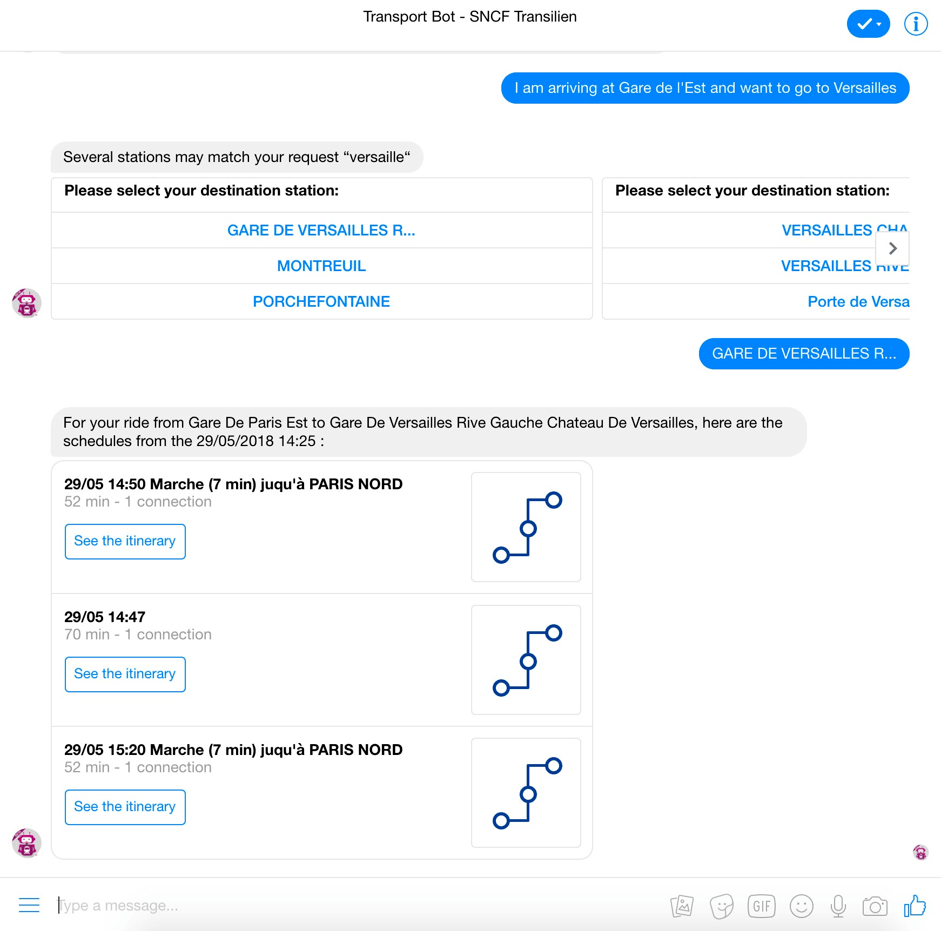
(SAP Commerce’ AI bot | Source)
Agents can perform all interactions (answer queries, issue refunds, create sales orders, etc.) from one interface, so there’s no need to mess around opening new windows or switching screens.
SAP Customer Data Cloud
There’s a fine line between offering engaging, meaningful customer experiences and falling foul of industry data protection rules. Customer Data Cloud keeps you on the legal side of that line!
Its built-in “Customer Consent Solution” gives customers complete and transparent control over their data and how it’s used. And the “Customer Identity Solution” provides flexible and frictionless registration, authentication, and login experiences, all critical in the era of GDPR, CCPA, and beyond.
SAP Sales Cloud
SAP Sales Cloud is a mobile-first solution for sales managers. It’s packed with predictive analytics and detailed reports, as well as tools like “Deal Finder,” which uncovers new opportunities within existing accounts, and “Influencer Map,” which locates colleagues and contacts who can help you close deals.
How much does SAP Hybris cost?
SAP doesn’t publicly release its pricing information for the base Commerce Cloud platform, but it starts from over $100k per year, per license.
How does this compare to the competition?
Well, the Shopify Plus platform fee starts at $2,000 per month. Once you’re turning over $800,000 per month, the fee turns into a revenue-sharing model, set at 0.25% of revenue with a maximum $40,000 per month.
Salesforce Commerce Cloud’s licensing model is also based on a retailer’s gross merchandise volume (GMV), with the average percentage being around 2% - 3% for businesses turning over between $5m and $25m.
Fun fact: Core dna’s pricing is as simple as it gets. We don’t charge “per license” or take a % of your sales; what’s yours is yours. And, we don’t limit the number of applications that you use. Once you have access to the platform, you get access to ALL the applications.
SAP Commerce Cloud pros
Here are some of SAP Commerce Cloud advantages:
1. It has true omnichannel capabilitiesIt seamlessly integrates the customer journey across all touchpoints, reducing friction in the buying process. |
2. It offers highly personalized customer experiencesCustomer data patterns are recorded and put to great use, enhancing engagement through optimized experiences. |
3. It has plenty of pre-loaded featuresOut-of-the-box features are intuitive, well-designed, and useful. |
4. It’s highly adaptableIt can be structured and extended to suit all kinds of different businesses, whether B2B, B2C or B2B2C. |
5. It has widespread industry relevanceThe Industry Accelerators with their plug-and-play storefronts are ideal for a diverse range of sectors. |
6. It was globally conceivedIt benefits from excellent internationalization thanks to multi-language, multi-site, and multi-currency support. |
7. It’s reliableIt has a 99.95% SLA with 24/7 monitoring and proactive health and performance checks. |
8. It’s cloud-basedIt has all the pros associated with living in the cloud, such as scalability, agility, flexibility, and immediate access to the latest updates and releases. |
9. It looks great on all devicesIt has a responsive and adjustable user interface that works perfectly on every device. |
10. It’s highly integrated within its ecosystemIt integrates seamlessly with the rest of the SAP S/4HANA solution suite. |
SAP Commerce Cloud cons
Here are some of SAP Commerce Cloud disadvantages:
1. It’s expensiveCommerce Cloud doesn’t come cheap; their prices are at the upper end of the spectrum with some customers paying over $1M per year for their SAP Hybris platform |
2. It requires specialist implementationImplementation is generally not included and is provided by agency partners. It’s a complex process, leading to long project times. |
3. It requires extensive trainingIt’s a robust platform with lots of features, and this makes it hard to use. Intensive training is necessary to become a proficient user, and the learning curve for developers is steep. |
4. It’s not great for small- and medium-sized businessesCost and ease-of-use serve as barriers to entry for all but large companies. |
5. Its community is inactiveIts online community is weaker and less vibrant than many other platforms like Magento and Shopify. |
6. Its documentation is poorWith so many different versions, it can be difficult to find the answers you are looking for in SAP’s system. |
7. It requires heavy customizationIt’s adaptable, but only if you invest a lot of time and money into customizing it to suit your needs. |
8. It’s slowFor companies with large catalogues of 10,000 products or more, loading time to perform simple tasks can be sluggish on the back-end |
9. It’s developer-centricIt’s built with developers in mind. Non-technical users often struggle to get beyond the basics. |
10. It lacks standalone functionalityFor the price, you might hope to get features that are only available in the other SAP S/4HANA platforms or through additional paid-for modules. |
SAP Commerce Cloud vs Core dna
| item | SAP Commerce Cloud | Core dna |
|---|---|---|
| Multi-site management | ✓ | ✓ |
| Decoupled architecture | X | ✓ |
| Multi-tenant architecture | X | ✓ |
| Content personalization | ✓ | ✓ |
| Content management system | X | ✓ |
| eCommerce platform | ✓ | ✓ |
| API support | ✓ | ✓ |
| B2B/B2C/D2C | ✓ | ✓ |
| Flexible content model | X | ✓ |
| System templating | X | ✓ |
| Requires internal dev team | ✓ | X |
| Requires ongoing maintenance | X | X |
| Modular applications | X | A collection of applications for content, eCommerce, marketing, and collaboration |
| 3rd party integrations | Connects with SAP’s partner ecosystem | ERP, CRM, Marketing, CDP, payment gateways, shipping providers, logistics engines, tax calculation & remittances, web hooks |
| Performance/security | Managed by users/customers | WAF/DDoS, Geo-redundancy, TSL/SSL encryption, CDN |
| Monitoring | Managed by users/customers | Performance & uptime monitoring, error management |
| Infrastructure | Managed by users/customers | API/Hooks interface, GIT version control, continuous and parallel development |
| Network | Managed by users/customers | Managed geo-redundant DNS, Anycast IP range, 45 Edge locations |
| Best for industry | eCommerce | eCommerce, publishing, marketing |
| Price | Available upon request | $1,250/month/site for access to all applications (e.g. Commerce, content marketing, intranet, digital workplace, etc.), unlimited users, 100k server requests (A "Request" is a call to Core dna engine over the Internet which resolves as a dynamic web page or structured data content. For example, AJAX requests, headless queries, and REST API calls.) |
Summarize with