
How does a hybrid headless CMS differ from a fully headless CMS?
A fully headless CMS provides an API for content delivery and no built-in frontend. A hybrid headless CMS does the same API-first delivery but adds a structured visual editing layer that allows non-developer teams to manage and publish content without writing code.
A fully headless CMS provides an API for content delivery and no built-in frontend. Developers build the entire presentation layer. A hybrid headless CMS does the same API-first delivery but adds a structured visual editing layer that allows non-developer teams to manage and publish content without writing code.
The difference becomes operationally significant at scale. With a fully headless CMS, every change that affects page layout or structure requires developer time. With a hybrid headless CMS, marketing teams control the content layer independently while developers retain ownership of architecture, integrations, and the API delivery model.
Related posts
 Platform & Architecture
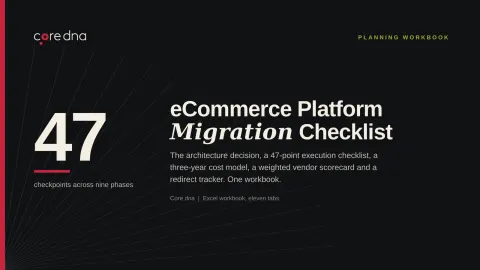
eCommerce Platform Migration: A 47-Point Checklist for 2026
Platform & Architecture
eCommerce Platform Migration: A 47-Point Checklist for 2026
 Platform & Architecture
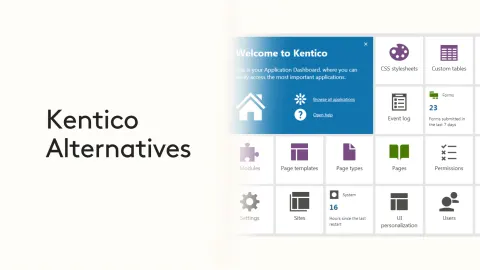
Kentico Alternatives for Multi-Property Operators
Platform & Architecture
Kentico Alternatives for Multi-Property Operators
 Platform & Architecture
Salesforce Commerce Cloud Alternatives: 6 Platforms Enterprises Should Consider Instead
Platform & Architecture
Salesforce Commerce Cloud Alternatives: 6 Platforms Enterprises Should Consider Instead
 Platform & Architecture
10 Best Enterprise CMS of 2026
Platform & Architecture
10 Best Enterprise CMS of 2026
 Platform & Architecture
Migrating to Drupal 12: What It Really Costs, and the Question Nobody's Asking
Platform & Architecture
Migrating to Drupal 12: What It Really Costs, and the Question Nobody's Asking
 Platform & Architecture
Contentstack Alternatives in 2026: What Type of Agentic Experience Matters to You?
Platform & Architecture
Contentstack Alternatives in 2026: What Type of Agentic Experience Matters to You?