
MCP 2.0 is out, and we're excited about this one.
Your AI assistant could already update pages, posts and products on your Core dna site. With 2.0 it can build whole features: a landing page for a sale that starts and ends on its own, an alert that sends every new enquiry to your sales team, a new kind of content with its own fields. And when you only want one paragraph changed, that's all it changes.
On paper it looks like we went backwards. Before this release, Core dna MCP had 81 tools. Version 2 has 65. Here's how fewer tools ended up doing more, starting with an app our CTO had Claude build from a single brief.
Want to try this for yourself?
On this page:
What our CTO built from one brief
Here's what building on Core dna looks like at full scale. To test the release, our CTO, Dmitry Kruglov, gave Claude a brief for one of our clients. They collect a lot of emails through web forms, some with more than 300,000 submissions, and had no reporting on any of it.
The brief set out the outcome (a live report page for each form), the approach (one automation checks for new submissions and hands the work to another) and the constraints (no endless loops, big backlogs handled in batches, no two runs writing at once). Claude wrote a plan, Dmitry reviewed it and answered its questions, and then it built, on a development copy of the client's site:
- A new kind of content that stores the report data and shows each report as a page with a private, hard-to-guess address
- An automation with 13 steps that checks each form for new submissions
- A second automation with 26 steps that reads the new submissions and updates the numbers
The screenshots below look technical, and you never need to build or read anything like them yourself. Claude built every step from the brief. You describe what you want in plain language, and the AI builds it for you.
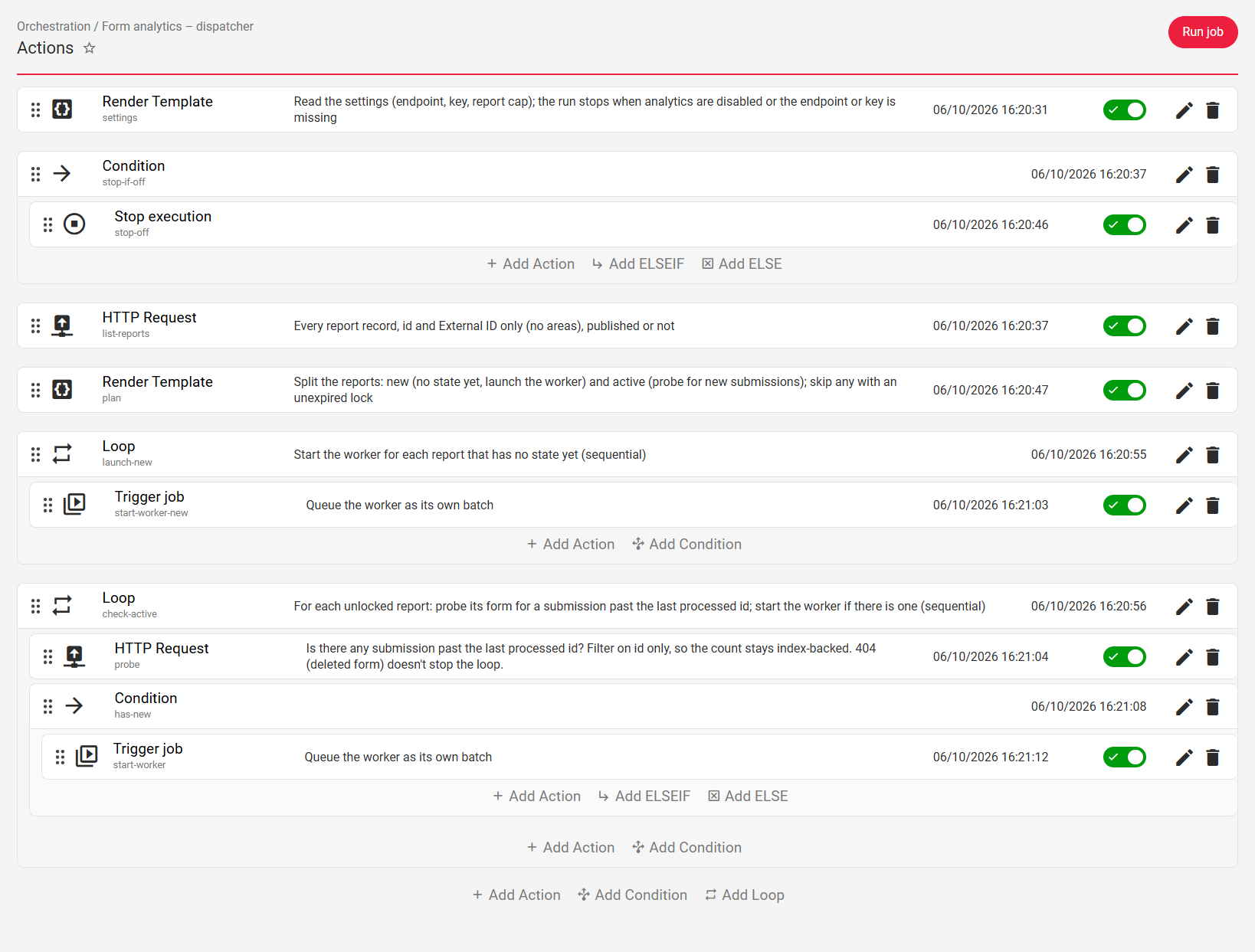
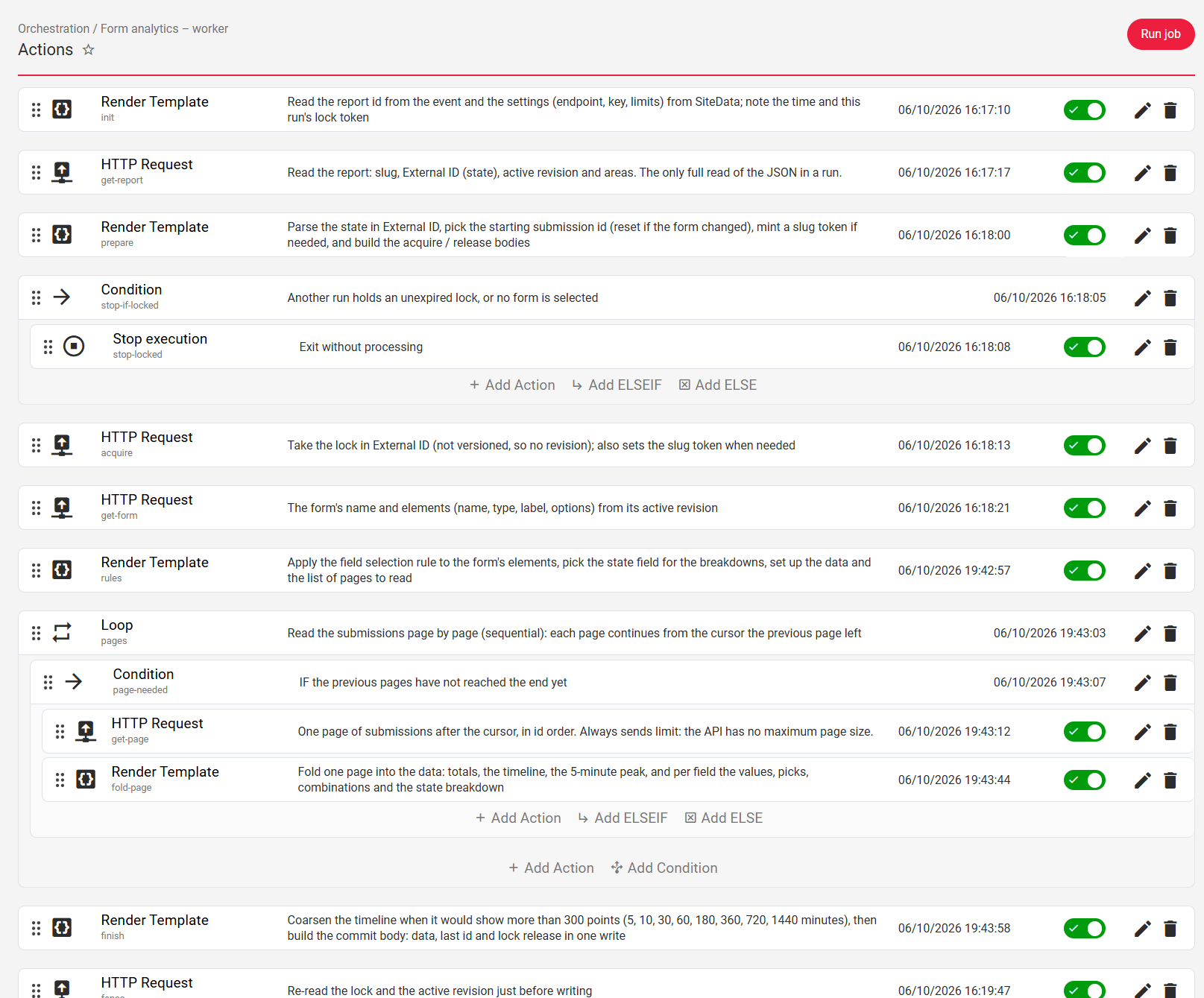
To turn on reporting for a form, someone on the team creates a report and connects it to that form. "Now we can build full-blown apps on Core dna from Claude," Dmitry told the team afterwards.
Before 2.0, a build like this would have been a development project. Now it starts with a brief.
Fewer tools. More power.
A lot of MCP servers turn every part of their API into its own tool. The AI then has to chain small steps together to finish one task: looking things up, recovering from errors and trying again.
We rebuilt Core dna MCP around the tasks people actually ask for. Each tool now finishes a whole task, even when that takes several steps behind the scenes. "A good MCP server is like a separate program," says Dmitry. "It's like building a mobile app for your website. It doesn't have to replicate everything your website has."
Fewer, clearer tools mean your assistant picks the right one first time. Answers also carry about 30% less data, which leaves more room in the conversation for the work you asked for. Anthropic's guide to writing effective tools for agents makes the same case.
Build automations by describing them
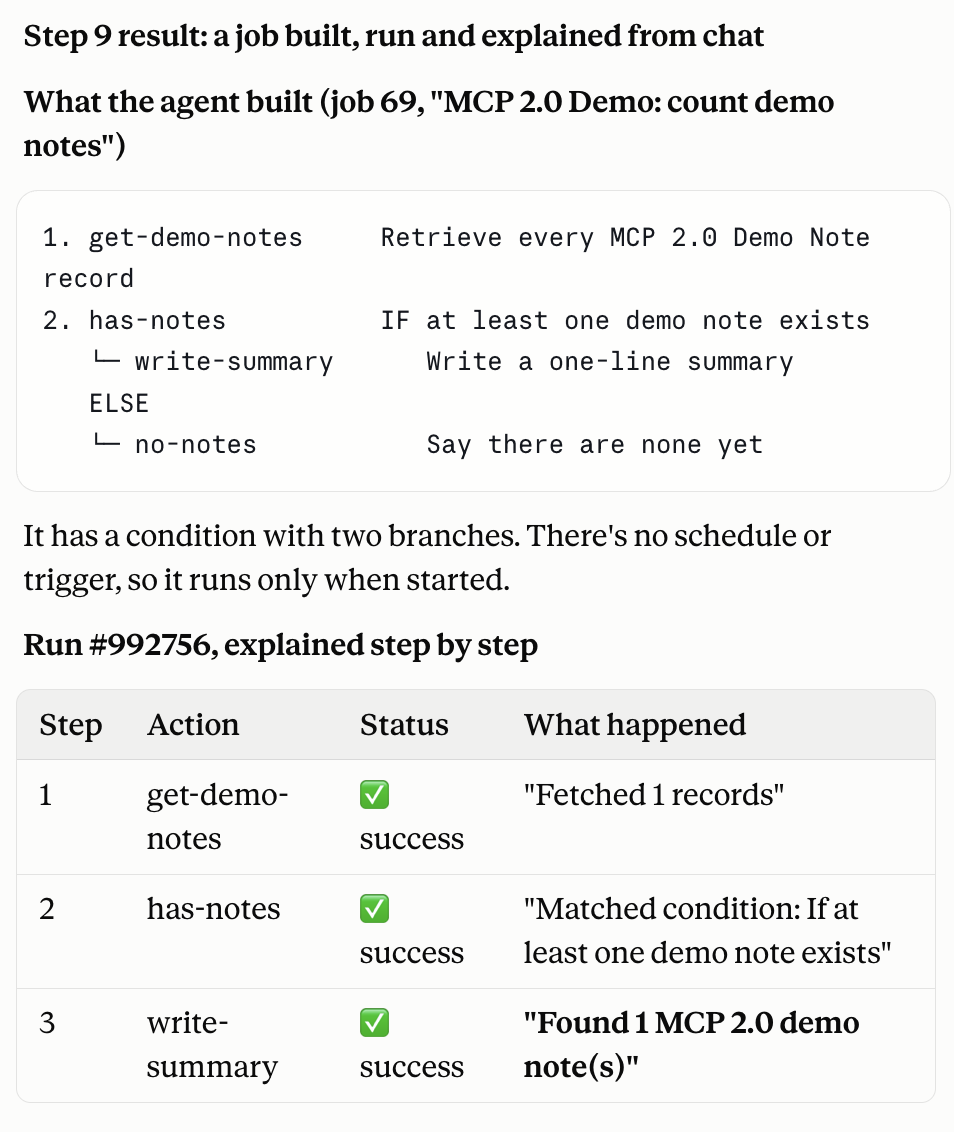
Say what should happen and when, and the agent builds it: an email to your sales team every time someone fills in the contact form, a sale that starts on Black Friday and ends after Cyber Monday. An automation can start from a form, a schedule, a change to any record or a webhook, and it can branch and repeat.
If something goes wrong, the agent runs the automation, finds the step that failed, explains it and runs it again. Your team checks the result, the same way you'd review a colleague's work. In the Core dna admin these are called jobs. See how automations and workflows run in Core dna.
Add new kinds of content
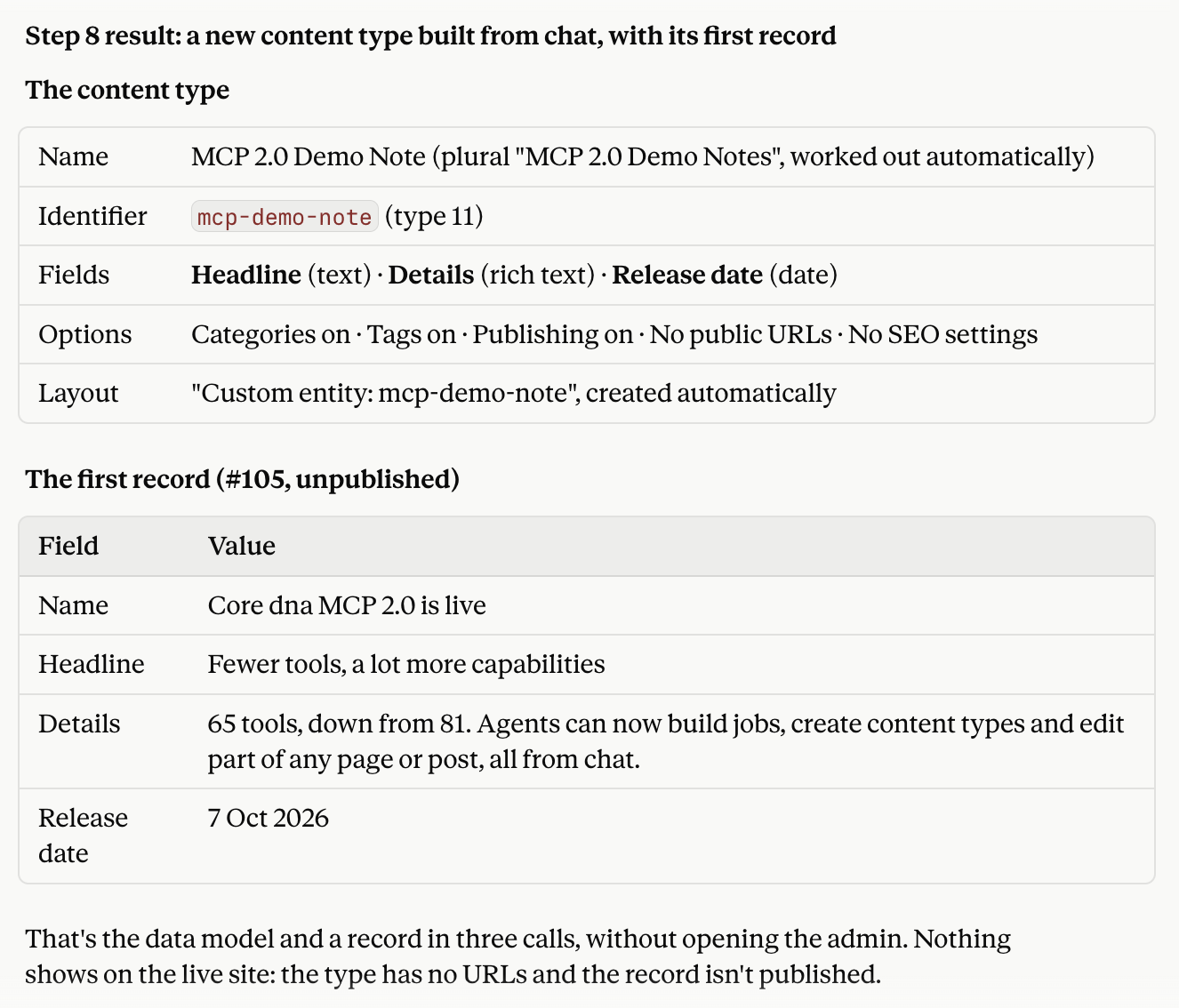
Events, case studies, product guides, store locations. Describe the content you need and the agent sets it up with the fields, web addresses, categories, tags and publishing options to match, then adds the first entries as drafts.
Put a new kind of content together with an automation and you have a working feature, built in one conversation. That's how the analytics app above was made.
Change one part of a page
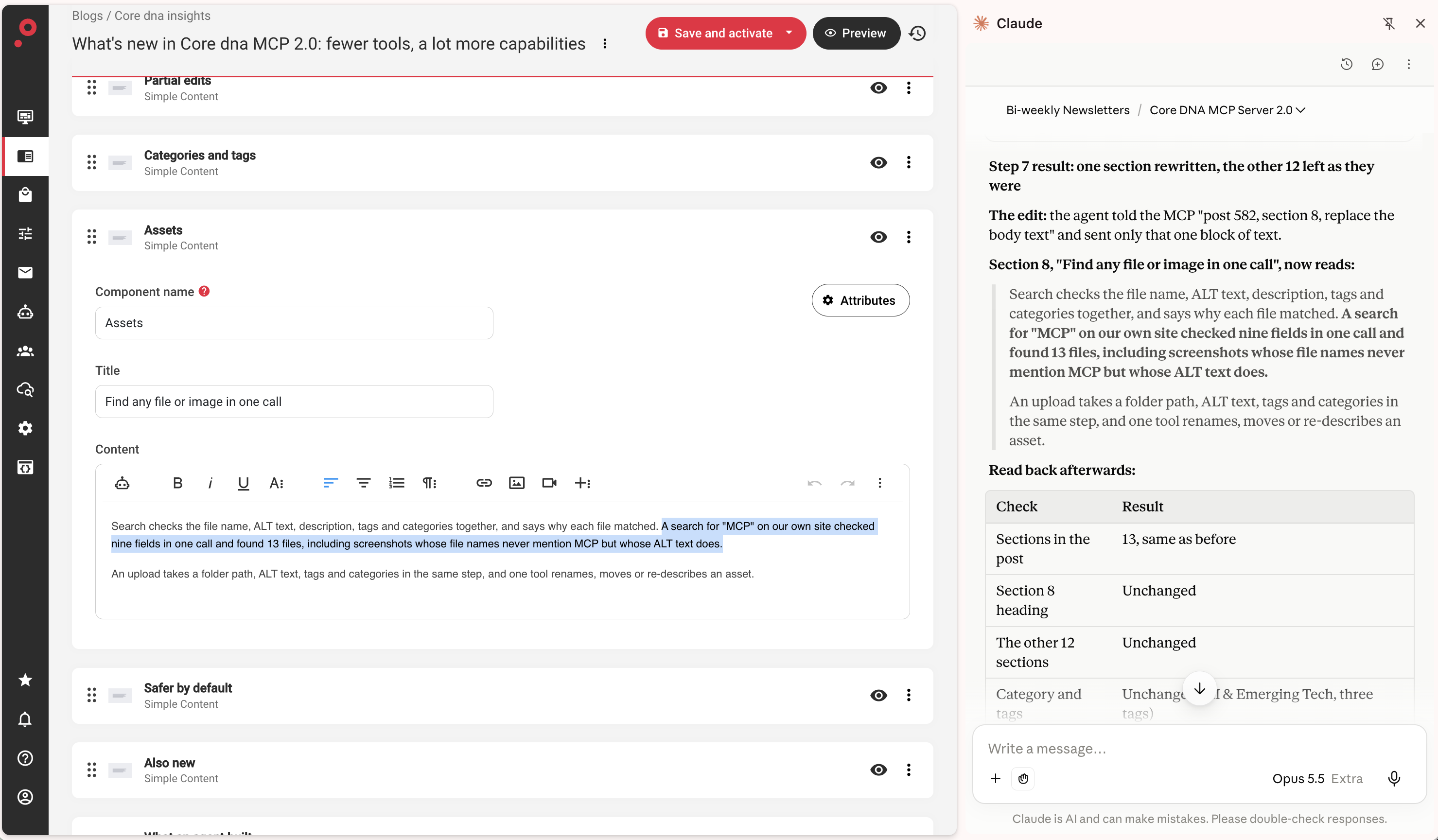
Ask for one paragraph to change and only that paragraph changes. Everything else on the page, post or FAQ stays exactly as it was, and the previous version is kept, so every change is easy to check and easy to undo.
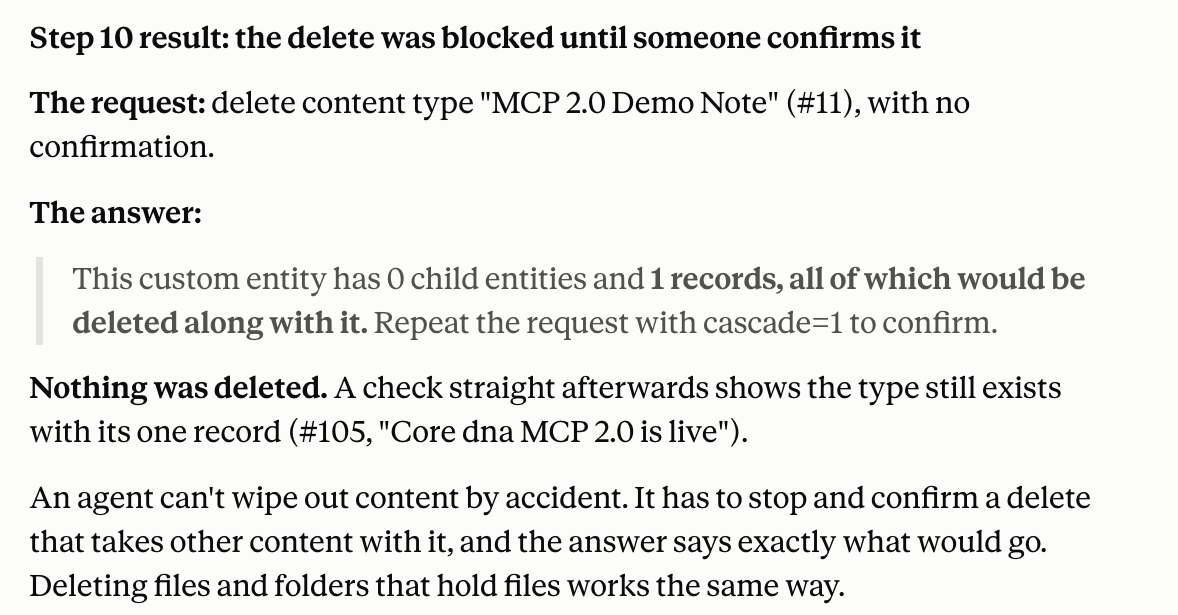
It asks before anything risky
- Deletes need your OK. If removing something would take other content with it, the agent has to confirm first, and it tells you exactly what would go.
- No passwords. The MCP never sets passwords. New users set their own.
- Safe uploads. Files can only be added from public, secure web addresses.
- Hidden credentials. Keys and passwords inside automations are masked.
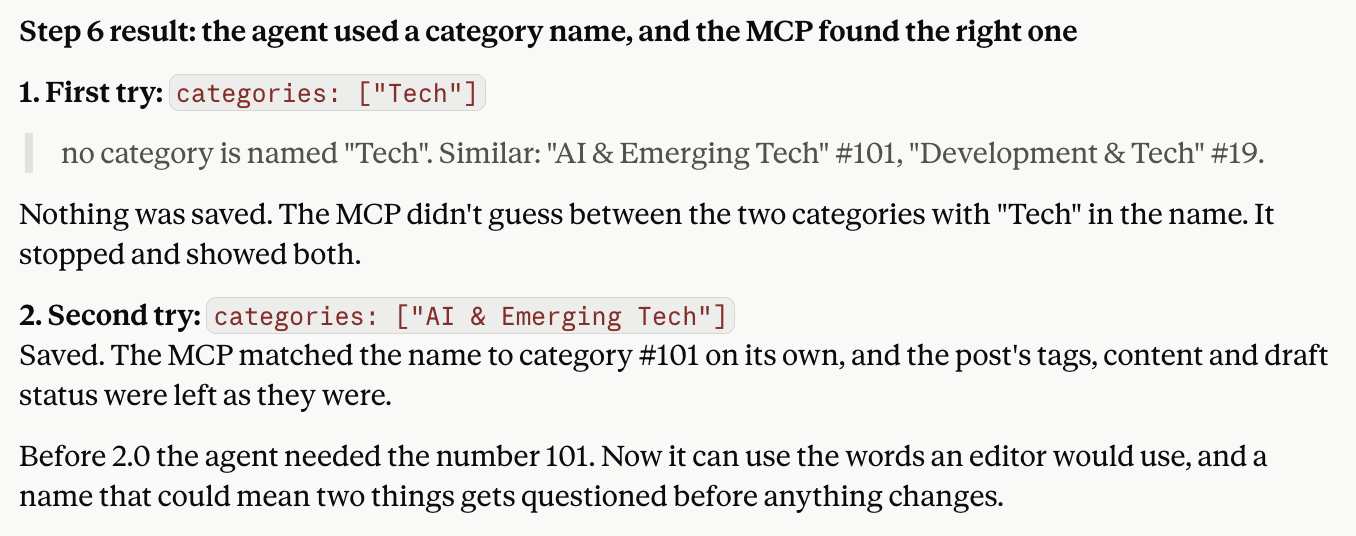
Also improved
Smaller changes that add up when you work on your site from chat:
- Tag by name. Say "tag this as Product News" and it's done. If two tags sound alike, the agent asks which one you mean.
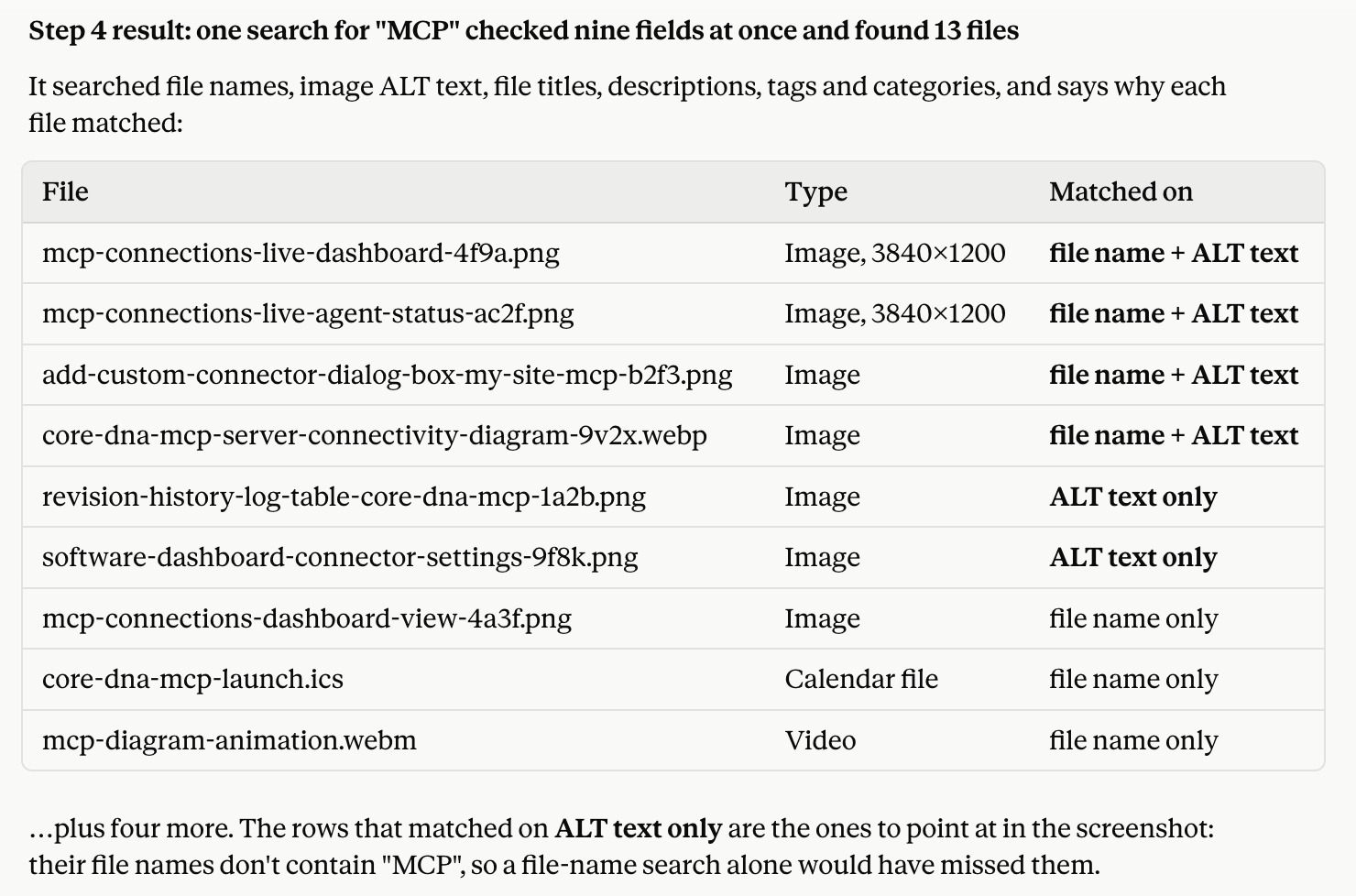
- Find any image or file. Search by name, ALT text, description or tag, and see why each one matched.
- Find a page from its web address.
- See your full menus, with the page behind every link.
- Read forms and their entries by field name.
- Every site and language in your account in one view, so the agent works on the right one.
- Clearer messages when something can't be done, so the agent can correct course without guessing.
Start with these prompts
Try these in Claude or ChatGPT with your Core dna site connected. Swap in your own products, pages and forms.
- "Create a landing page featuring our diamond rings at 25% off. Launch it on Black Friday and restore regular prices after Cyber Monday."
- "When someone fills in our contact form, email their details to our sales team."
- "Set up a Case Studies section with client, industry and results fields, then add our first one as a draft."
- "Rewrite the intro on our About page so it's shorter, and show me the new version before you save it."
- "Tag our 10 latest blog posts by topic. If a tag isn't clear, ask me first."
Connect your site to MCP 2.0
MCP 2.0 is live for Core dna customers now, and we can't wait to see what you build with it. It works with Claude, ChatGPT and other AI tools that support the Model Context Protocol.
Read how to connect Core dna to AI agents, or see 10 multi-property workflows teams run on Core dna MCP. For the thinking behind the design, read why we built an MCP server for marketers, not developers.
Try MCP 2.0 on your own Core dna site.
Summarize with